
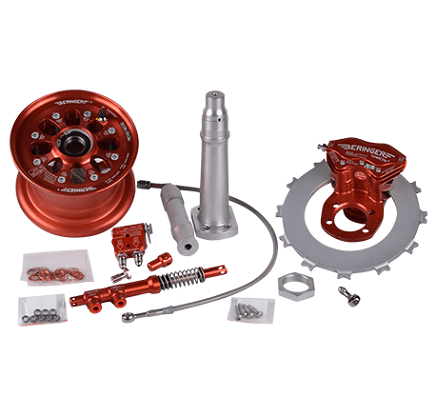
When configuring my Sling TSi, one of the optional upgrades I considered was the Beringer wheelset and brake system. They’ve gained a lot of attention in the aviation community, and since Sling Aircraft now offers them as a standard option on the TSi and HW models, I wanted to take a closer look at whether they were the right fit for my build.
After researching the specs, comparing costs, and evaluating my mission profile, I ultimately decided not to go with Beringer brakes—at least for now. The good news is that I can always add them later if I change my mind. Here’s how I came to that decision.
The Case for Beringer Brakes
There’s no doubt that Beringer makes a high-quality braking system. Compared to the stock Matco brakes, they offer:
- Superior braking performance and anti-skid functionality, which improves directional control during landing and taxiing in certain conditions.
- A slight weight reduction of a few pounds, though not enough to be a major factor.
- Long-term durability, thanks to aircraft-grade aluminum, stainless steel, and advanced composites that require less frequent maintenance.
- Sleek engineering and aesthetics, with anodized red or black finishes that add a high-performance look.
The Trade-Offs That Made Me Think Twice
As much as I appreciate engineering excellence, I had to weigh the practical aspects of this upgrade. Here’s where the decision leaned toward sticking with Matco brakes instead.
- Cost. At around $8,000, Beringer brakes are significantly more expensive than Matco. While they may require less frequent maintenance, when maintenance is needed, it’s more expensive compared to Matco.
- Availability and serviceability. Matco brakes are widely used and easy to service. With Beringer, finding parts or qualified A&Ps to work on them could be more challenging, especially in remote locations. This could lead to potential delays if I ever need service while on a cross-country trip.
- Questionable cost-benefit for my mission. My primary mission is cross-country travel, not short-field landings or backcountry flying where superior braking might make a bigger difference. The added performance is nice, but I don’t see it significantly improving my overall experience.
- Hidden visual appeal. I love well-designed components, but since my wheels will be covered, the aesthetics of Beringer brakes won’t be visible anyway.
Final Decision: Sticking with Matco (For Now)
While Beringer brakes are undoubtedly well-engineered, I ultimately couldn’t justify the higher cost and potential serviceability issues for my mission. If I were planning backcountry flying, frequent short-field operations, or wanted the absolute best braking performance, I might have leaned toward Beringer.
However, for my needs—long cross-country travel, reliability, and ease of maintenance—Matco provides solid performance at a fraction of the cost. Plus, since the upgrade is possible later, I always have the option to switch to Beringer brakes down the road if I feel they’re worth the investment.
That said, I can absolutely see why Beringer brakes excite other builders and pilots. If you’ve flown with them or have a strong opinion one way or the other, I’d love to hear your thoughts!




 Slingology - Building and Flying a Sling TSi
Leave a comment