
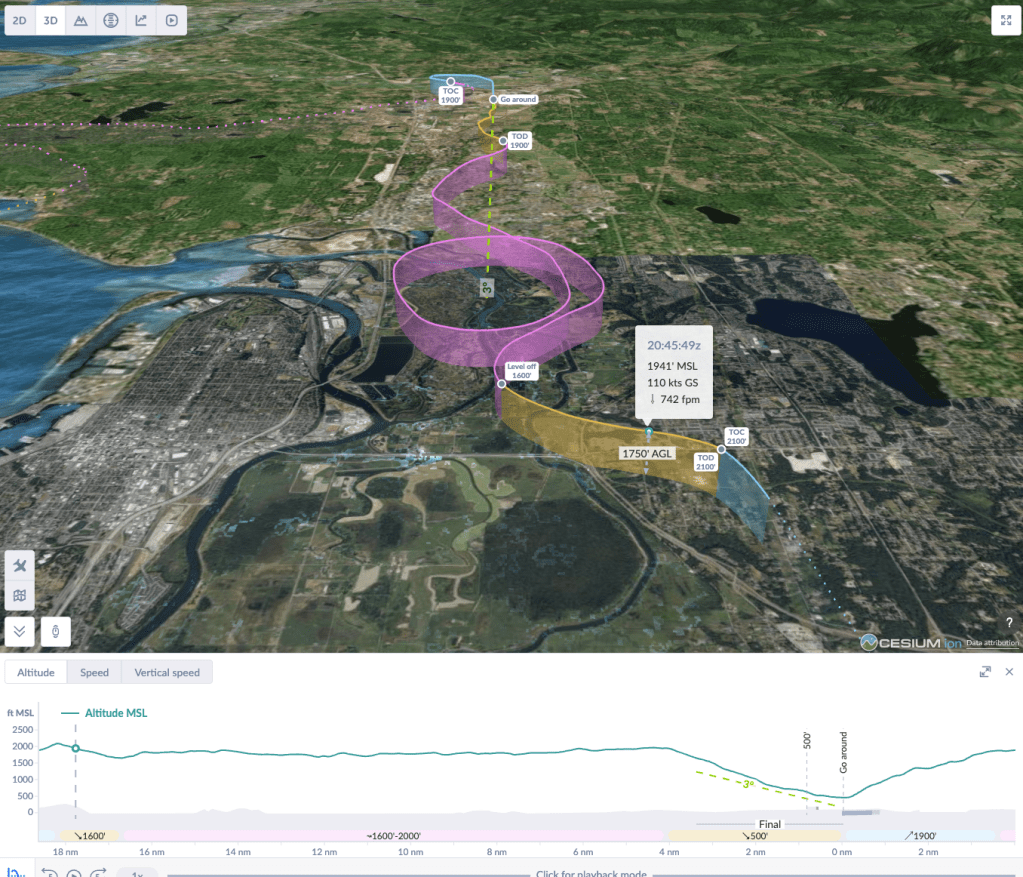
Instrument training requires precision, consistency, and the ability to make the right corrections at the right time. During a flight, it can be difficult to recognize small mistakes or pinpoint exactly where things went wrong. That’s why analyzing flight data after each lesson is such a valuable tool.
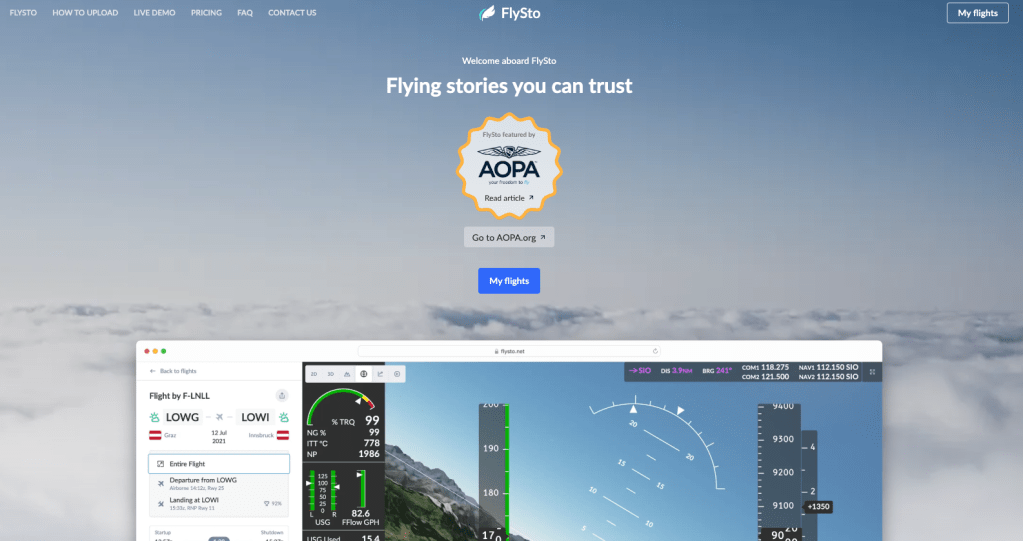
By collecting flight data from ForeFlight Track Logs, which are connected to my G3X avionics, and uploading it to FlySto.net, I can break down my flights in detail. This allows me to spot trends, improve approach techniques, and refine my IFR flying skills.
Collecting Flight Data from ForeFlight & G3X
ForeFlight’s Track Logs record key flight parameters like altitude, speed, and position. Since my G3X is connected to ForeFlight, the data captured is more accurate than a simple GPS track. After the flight, I export the Track Log and upload it to FlySto.net for a more detailed analysis.
Analyzing Flight Data with FlySto.net
FlySto.net provides a deeper level of flight review compared to ForeFlight’s Track Logs. It allows for full visualization and performance analysis, supporting avionics data from systems like Garmin G3X, GTN Xi, and G1000.
What makes FlySto.net valuable is its ability to display my flight in multiple ways:
- 2D and 3D flight visualization to replay and examine my exact flight path.
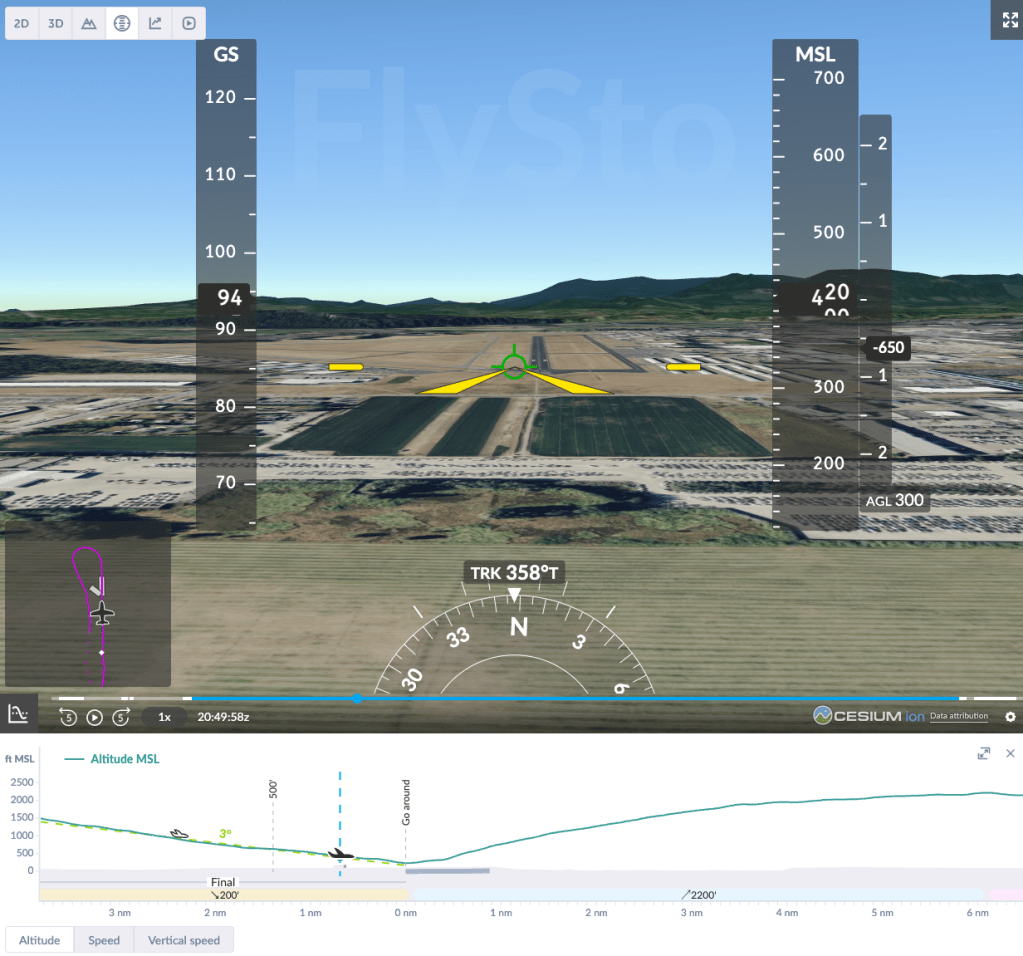
- Cockpit instrument replay to see my flight as if I were back in the cockpit.
- Altitude and vertical speed analysis to assess how well I managed my descents.
- Lateral tracking review to evaluate how accurately I held course and intercepted approach paths.
- Engine performance trends, which can be useful for optimizing cross-country flights.
This additional layer of analysis helps me see where I deviated from a proper IFR procedure and where I flew well.
Breaking Down an IFR Approach: RNAV 34 LPV into KAWO
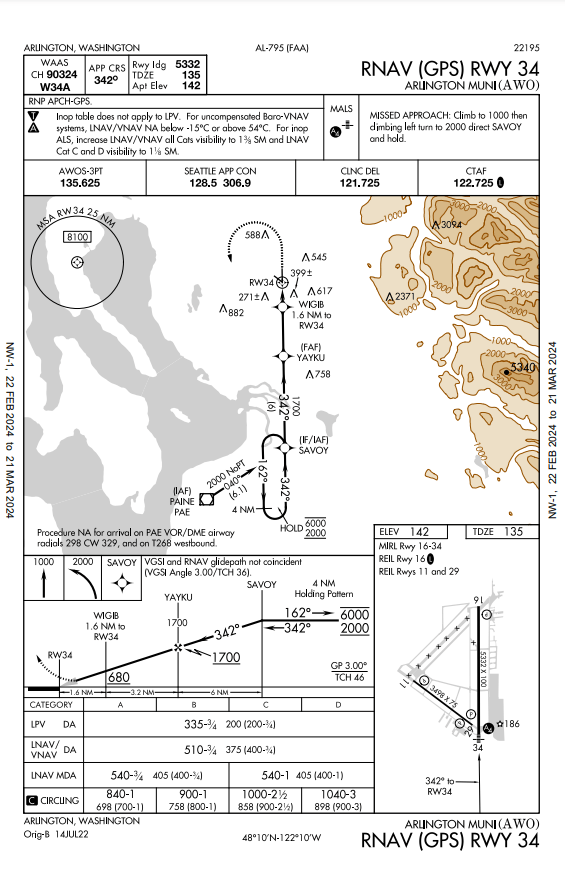
One of my recent IFR training flights included an RNAV 34 LPV approach into KAWO (Arlington, WA). The conditions included bumpy air and a strong 20-knot crosswind. My goal was to fly a stabilized approach to DA while maintaining accuracy, but after reviewing my flight in FlySto.net, I found key areas that needed improvement.
Here is the whole flight in FlySto.net
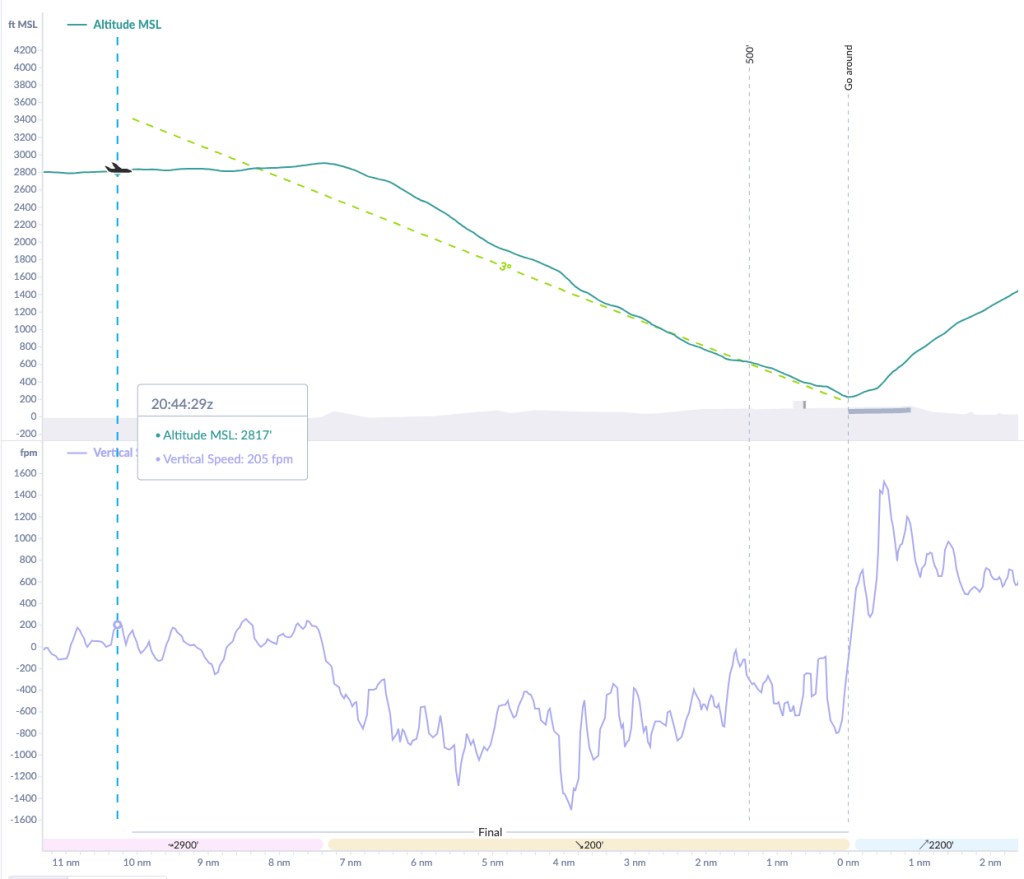
The altitude and vertical speed data showed that I was too high crossing the Final Approach Fix and did not begin my descent soon enough. Because of this delay, I had to increase my rate of descent later, which made it harder to stay stabilized. The vertical speed graph confirmed that my descent was inconsistent—partly due to turbulence, but also because I wasn’t making smooth adjustments.
Lateral tracking was also a challenge. The strong crosswind required precise corrections, but instead of making small adjustments, I was overcorrecting. This was especially noticeable at the Initial Approach Fix, where I turned too far west before getting back on course. Later in the approach, I stabilized better, but FlySto.net’s replay showed how much effort it took to correct my lateral deviations.
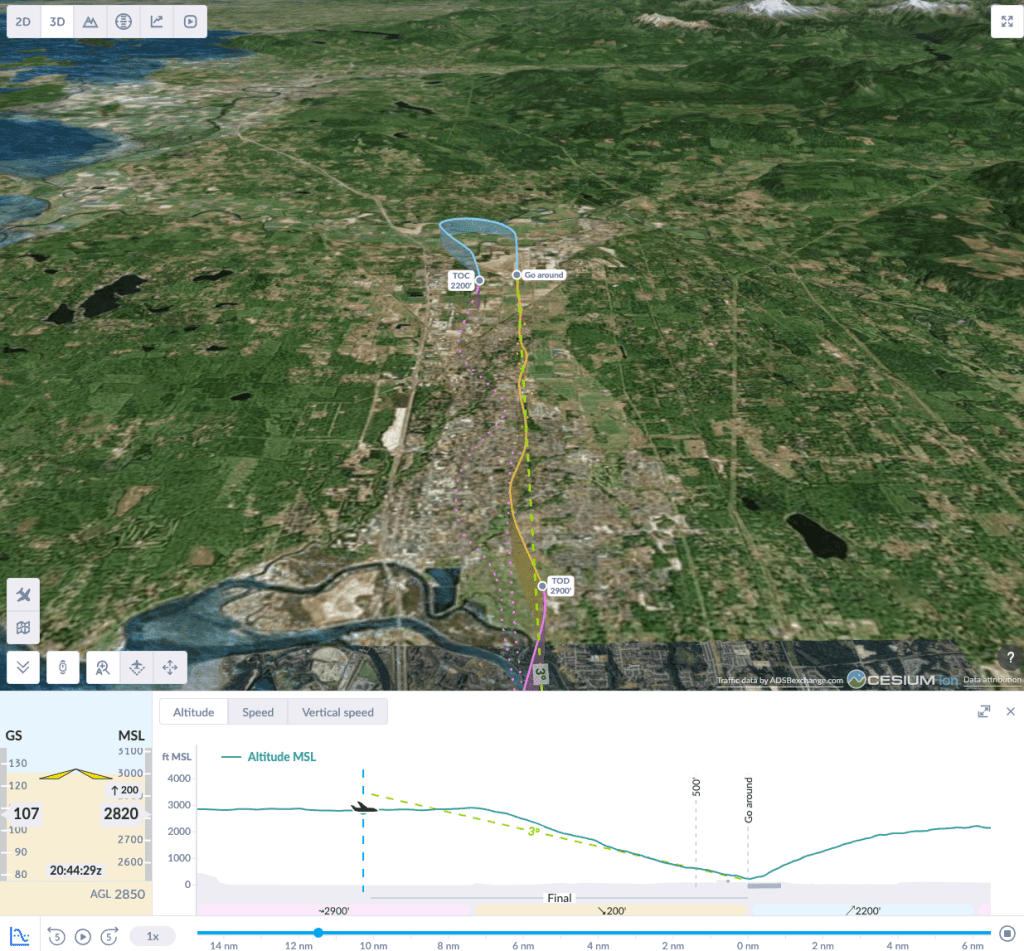
The 3D visualization in FlySto.net provided a clear picture of my final approach. The last segment of the flight was stable, and I reached DA consistently, which was reassuring. Seeing the full replay helped me recognize that once I made the necessary corrections, I was able to stay on course.
Lessons Learned
After reviewing the data, a few key takeaways stood out.
I need to start my descent sooner after crossing the Final Approach Fix. Being too high early on forces more aggressive corrections later, which disrupts a stable approach. I also need to be more precise with lateral corrections, especially in strong winds, to avoid overcorrecting. Finally, while turbulence contributed to the inconsistent descent rate, I still need to work on making smoother power and pitch adjustments.
FlySto.net is proving to be an excellent tool for IFR training. The ability to see altitude trends, lateral tracking, and a full 3D view of the approach provided a much clearer picture than ForeFlight alone. I plan to continue using it throughout my training to improve my approaches, holds, and enroute procedures.
Beyond IFR training, FlySto.net is also useful for reviewing cross-country flights, fuel efficiency, and overall flight performance. Having the ability to replay flights in this level of detail makes it a valuable addition to my pilot toolkit.
If you’ve used FlySto.net or other flight analysis tools, I’d love to hear how they’ve helped your training and flying!





 Slingology - Building and Flying a Sling TSi
Leave a comment