
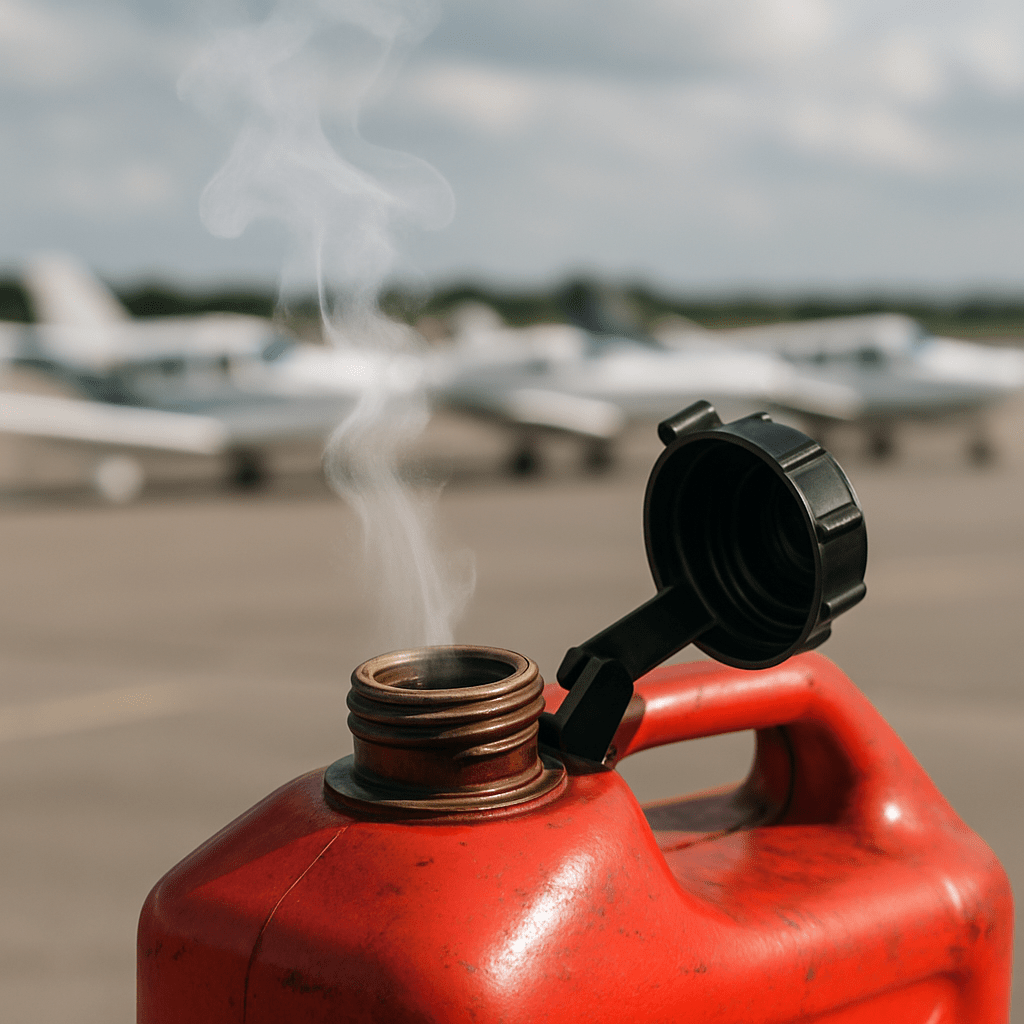
Vapor Lock: A Hot Topic
Vapor lock isn’t the kind of thing that keeps most pilots up at night — until it happens. Imagine climbing out on a hot day, your engine humming along, when suddenly the hum turns to a hiccup. The fuel is still in the tanks, but it’s not reaching the cylinders. What just happened?
Welcome to the world of vapor lock — a sneaky, heat-driven problem that can turn liquid fuel into useless vapor bubbles, choking off your engine’s lifeblood. It’s a concern that hasn’t disappeared with the arrival of modern fuel-injected powerplants. In fact, for aircraft like the Sling TSi with a Rotax 916iS engine and low-wing fuel architecture, vapor lock remains a very real possibility.
The risk is even more pronounced when using automotive fuel (MOGAS) — one of the big advantages of Rotax engines. MOGAS is cheaper, widely available, and more environmentally friendly than traditional 100LL Avgas. But it’s also blended seasonally, and winter-grade fuel has higher volatility to aid cold starts. If that fuel is used on a hot day — particularly during seasonal transitions — it can vaporize too easily, increasing the risk of vapor lock. That’s why understanding vapor lock — and how to prevent it — is essential for pilots who want to take full advantage of the Rotax’s flexibility.
This post takes a deep dive into what vapor lock is, why it’s especially relevant for modern experimental aircraft, and how installing intelligent boost pumps in your Sling can help prevent it. Along the way, we’ll look at real data, smart engineering, and the practical steps you can take to keep your fuel flowing — and your engine running — when the heat is on.
What Is Vapor Lock?
At its core, vapor lock is exactly what it sounds like: fuel vapor — instead of liquid — forming somewhere it shouldn’t and blocking the normal flow of fuel to the engine. The result? A very real risk of engine hesitation, power loss, or even complete shutdown.
This happens when the fuel’s vapor pressure exceeds the pressure in the fuel line, causing it to boil and create vapor bubbles. These bubbles can displace liquid fuel or get compressed and collapse unpredictably as they move through the system — a condition known as cavitation. Either way, your engine doesn’t get the steady, high-pressure flow of fuel it needs to run.
One of the most important — and often overlooked — contributors to vapor lock is the seasonal variability in MOGAS blends. Automotive fuel is formulated differently in summer vs. winter:
- Winter-blend MOGAS has a higher Reid Vapor Pressure (RVP) to help engines start more easily in cold weather.
- Higher RVP means the fuel is more volatile — it vaporizes more easily.
- That’s great in January. But if you use leftover winter fuel on a hot spring day, the fuel can vaporize prematurely, especially at altitude or in heat-soaked lines.
This is exactly the kind of situation that invites vapor lock — and it’s most likely to happen during seasonal transitions, when winter fuel is still in circulation but ambient temperatures begin to climb.
In a low-wing, fuel-injected setup like the Sling TSi, the risk is magnified:
- The fuel system lacks gravity assist.
- The pumps are usually mounted high, often near the firewall.
- The line from the tanks to the pumps can be long and exposed to engine bay heat.
- If the ambient pressure (say, at 10,000 feet) is low and the fuel is warm (say, 100°F winter-blend MOGAS), you’re squarely in the vapor lock danger zone.
To make things worse, the stock Rotax pumps can actually draw a slight vacuum on the feed line — dropping pressure by 1–3 psi below ambient, as shown in testing by Aerospace Innovations. That’s enough to push volatile fuel right past its boiling point.
So while vapor lock may sound like a relic of the past, it’s a real, physics-driven problem — especially when you’re using MOGAS, climbing on hot days, or restarting after a heat soak.
This is a great YouTube video from Ron Singh with that describe how he experienced vapor lock and analysis of the seasonal MOGAS blends.
If you would like to geek out on this subject you can read the “Application of factor analysis in the determination of vapor lock tendency in aviation gasolines/motor gasoline/blends and the compatibility as alternatives in naturally aspirated aviation engines” paper with a thorough analysis of the topic.
Boost Pumps to the Rescue
So how do you stop fuel from boiling in your lines at 8,000 feet on a summer day? The key is simple in concept: pressure.
Vapor lock occurs when the fuel’s vapor pressure exceeds the pressure in the line — so the solution is to raise that line pressure, especially on the suction side (the part between your tank and your engine-driven or electric pumps). That’s where boost pumps come in.
Boost pumps, also called auxiliary or transfer pumps, are electric fuel pumps installed close to the fuel tank. Their job is to push fuel toward the engine with enough pressure to prevent vapor formation — especially when the main engine pumps might otherwise be pulling (and thereby lowering pressure).
In the case of the Rotax 916iS on the Sling TSi, the stock system includes two engine-mounted pumps, controlled via the ECU. They’re mounted high — typically on or near the firewall — and are optimized to feed the high-pressure injection system. But here’s the catch: when both Rotax pumps are running, testing has shown they can drop the suction line pressure by 2–3 psi below ambient. That might not sound like much, but if you’re already at altitude, climbing through thinner air, and your fuel is warm and volatile, that pressure drop can put you right into vapor lock territory.
Enter the wing-mounted boost pump system. By installing inline pumps closer to the tanks, you provide positive pressure throughout the feed line. This has several benefits:
- It prevents vapor bubble formation before it starts.
- It reduces or eliminates cavitation at the Rotax pumps.
- It provides redundancy, which is never a bad thing in aviation.
One company leading the charge in this area is Aerospace Innovations. They’ve developed the Intelligent Fuel Boost System, which includes wing-mounted pumps, a smart control module, and automatic tank sensing. This system is specifically designed for the Sling TSi and addresses the unique challenges posed by its low-wing configuration and the Rotax 916iS engine. Their solution is currently the only dedicated wing-mounted boost pump system available for the Sling TSi, offering a comprehensive approach to mitigating vapor lock risks.
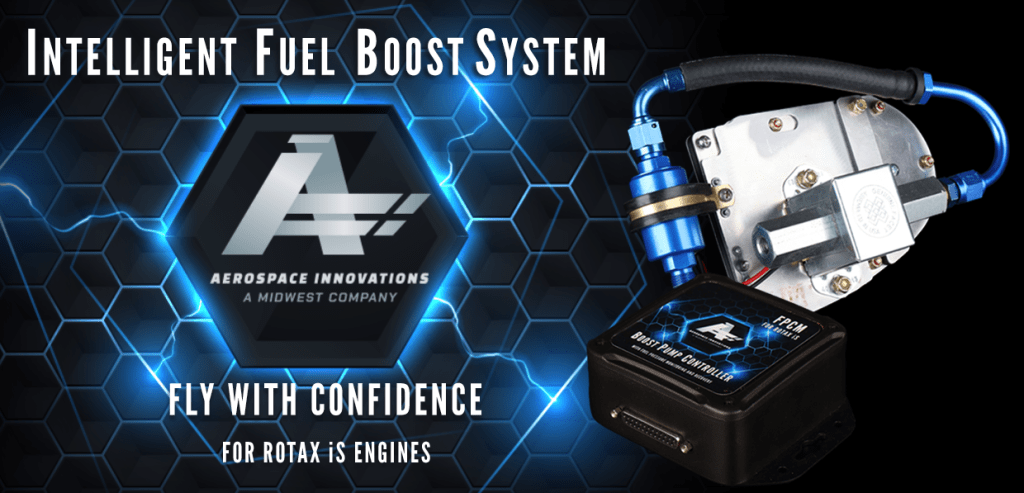
With proper installation, a well-designed boost pump system can turn a marginal fuel setup into a robust, high-altitude-capable fuel delivery network — one that’s ready for MoGas, hot climates, high-density altitude, and all the weird little pressure dips that come with real-world flying.
The Sling and Rotax Context
The Sling TSi paired with the Rotax 916iS engine is a modern, efficient, and powerful combination — but it also presents a unique set of challenges when it comes to fuel delivery.
For one, it’s a low-wing aircraft. That means there’s no gravity assist feeding fuel toward the engine. Instead, the fuel has to be pulled up from the tanks and routed forward — often through long lines and hot compartments — before it reaches the Rotax’s dual high-pressure pumps mounted near the firewall.
The Rotax 916iS is a fuel-injected engine, and like others in the iS-series, it comes with two redundant electric pumps controlled by the ECU. These are designed to provide sufficient pressure to the fuel rail under most conditions, and they’re excellent at their job — once they have fuel.
The issue is what happens before the Rotax pumps. When both engine pumps are running, as they typically are for takeoff and climb, they can actually reduce pressure in the feed line from the tanks — especially if the pumps are mounted higher than the tanks. Aerospace Innovations testing showed pressure losses of up to 2–3 psi below ambient, enough to trigger cavitation if the fuel is volatile or the aircraft is at altitude.
That’s where an inline boost pump system like the one offered by Aerospace Innovations comes in. By placing auxiliary electric pumps at the wing roots, right near the tanks, the system provides positive pressure in the feed lines, which:
- Offloads the suction demand from the Rotax pumps,
- Prevents vapor formation and cavitation,
- Boosts system resilience under high-demand conditions (hot starts, high-altitude climbs, fuel near boiling point).
And because it’s modular, the system integrates neatly with the Sling TSi’s fuel architecture. With a smart controller and auto-sensing tied to the fuel selector, it ensures the correct tank’s pump is always active, even when switching tanks mid-flight.
This isn’t about overengineering. It’s about building a fuel system that performs as reliably as the rest of the airframe and powerplant — and that takes full advantage of the Rotax engine’s MoGas compatibility and high-efficiency operation envelope.
Operating the Pump In-Flight
Once installed, wing-mounted boost pumps are simple to operate but play a critical role in keeping your fuel system vapor-lock free.
Here’s how to use them effectively:
- Startup, Takeoff, and Climb: Run the selected wing pump along with both Rotax pumps. This provides maximum pressure and redundancy — essential during high power and high temperature phases.
- Cruise: Drop to one wing pump and one Rotax pump. This prevents over-pressurization and keeps flow stable. If your system has auto-switching, the correct wing pump will follow your tank selection.
- Tank Switching: Manual systems require switching pumps yourself. Smart systems (like Aerospace Innovations’) detect selector position and switch automatically.
- Emergencies: If fuel pressure drops, the system can activate both Rotax pumps and alert you. It also defaults pumps ON if a failure occurs — a fail-safe feature built in for peace of mind.
The result? A smarter, safer fuel system that works with you in all phases of flight.
Installing a Boost Pump
Installing a boost pump system in the Sling TSi isn’t just a bolt-on mod — it’s a strategic upgrade to your aircraft’s safety and reliability. But like all things experimental aviation, installation details matter. A lot.
Placement Is Everything
The golden rule: keep the pump low and cool.
The Aerospace Innovations system solves this neatly by mounting the pumps at the wing roots, close to the tanks. This location:
- Minimizes suction line length
- Avoids the heat of the engine compartment
- Provides consistent positive pressure on the feed line
And best of all? Their TSi Wing Mounting Kit includes the hardware and plumbing to install the pumps without drilling into the wing structure — a huge bonus for builders concerned about complexity or warranty implications.
Integration and Control
The system includes a smart Fuel Pump Control Module (FPCM) and offers both manual switching and automatic tank-sensing. The latter uses a sensor mounted on the Andair fuel selector that tells the system which tank is active and ensures the correct wing pump is on — no extra switch flipping needed in cruise.
Electrical and Safety
Wiring is straightforward thanks to a pre-made harness (or you can DIY it if you’re comfortable). The system includes:
- Startup self-test
- Discreet alerts that integrate with the Garmin G3X or LEDs
- Fail-safes that default the pump to ON if the controller or sensor fails
- Fuel pressure monitoring, which can auto-activate the Rotax pumps if pressure drops
Builder Considerations
- If you have the older-style Sling TSi fuel selector shroud, you may need a replacement or modification to accommodate pump lines.
- The kit is modular — meaning it works whether you’re retrofitting or incorporating it during the build.
- It’s designed for any Rotax iS-equipped low-wing aircraft, not just the TSi.
Installation can be done during the build or post-airworthiness with a mod logbook entry, but the best time — as always — is before vapor lock gives you a reason to wish you had.
Build It Right, Fly It Confidently
Vapor lock may be a subtle failure mode, but the consequences can be anything but subtle — especially at altitude, on a hot day, or during a critical phase of flight. For pilots flying low-wing, fuel-injected aircraft like the Sling TSi, the combination of heat, pressure loss, and modern fuels (especially MOGAS) creates a vulnerability that’s easy to underestimate — until it isn’t.
The good news? Now there’s a solution.
By installing a wing-mounted boost pump system, you’re not just bolting on a component — you’re building in resilience. You’re turning a pressure-vulnerable fuel path into a stable, robust delivery system that can handle heat, altitude, volatility, and real-world conditions with confidence.
That’s exactly what I’m doing with my own Sling TSi build. After researching the system architecture, real-world vapor lock scenarios, and available solutions, I chose to install the Aerospace Innovations boost pump system. Its smart design, automatic tank sensing, and integrated safety features make it a compelling upgrade — one that aligns with the way I want to fly: further, safer, and with more flexibility to use MOGAS where it makes sense.
This kind of rapid, purpose-built innovation is only possible in the experimental aircraft world. In the certified arena, a system like this would take years to pass through FAA certification, with costs ballooning to the point of impracticality. But in experimental aviation, we have the flexibility to adopt smart, well-engineered solutions quickly — especially when they’re built with fail-safes and field-tested logic.
And speaking of safety: the system is designed so that if it fails entirely — whether electrically or mechanically — you’re no worse off than flying without it. The stock Rotax pumps continue to operate as intended, and the boost system simply becomes inert. It’s an added layer of protection, not a dependency.
Whether you’re building now or upgrading later, this is a system worth considering. Because vapor lock isn’t a theoretical problem — but with the right setup, it doesn’t have to be your problem either.
Build it right. Fly it far. And fly it cool.






 Slingology - Building and Flying a Sling TSi
Leave a comment