
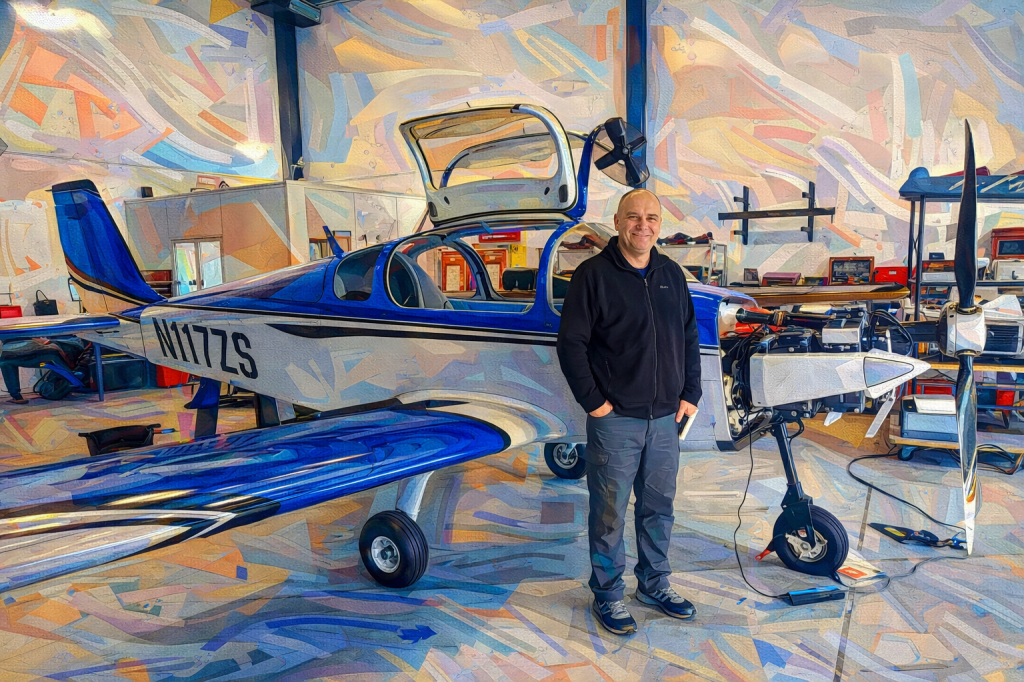

There are phases in a build where progress feels incremental — another bracket installed, another wire terminated, another subsystem checked off. And then there are phases where everything accelerates visually. This visit was that kind of week.
I arrived in Torrance on 2/15/26 just after the painting process had completed. The team had already been deep into finalization for over a week, and for the first time since this project began, the airplane didn’t look like a collection of assemblies. It looked whole. Systems are coming alive, surfaces are finished, and decisions made months ago are now visible in aluminum, paint, and glass screens. This was less of a “build week” for me and more of a milestone week — observing, coordinating, and absorbing the fact that this machine is becoming real.
Painting: From Concept to Presence
The painting process took about five weeks. My last visit had been in mid-December, and during that stretch there was little I could physically contribute. Painting is one of those stages where you simply have to trust the craftsmanship. I received progress photos along the way, and each one showed the Evoke design gradually coming to life. But photos flatten reality.
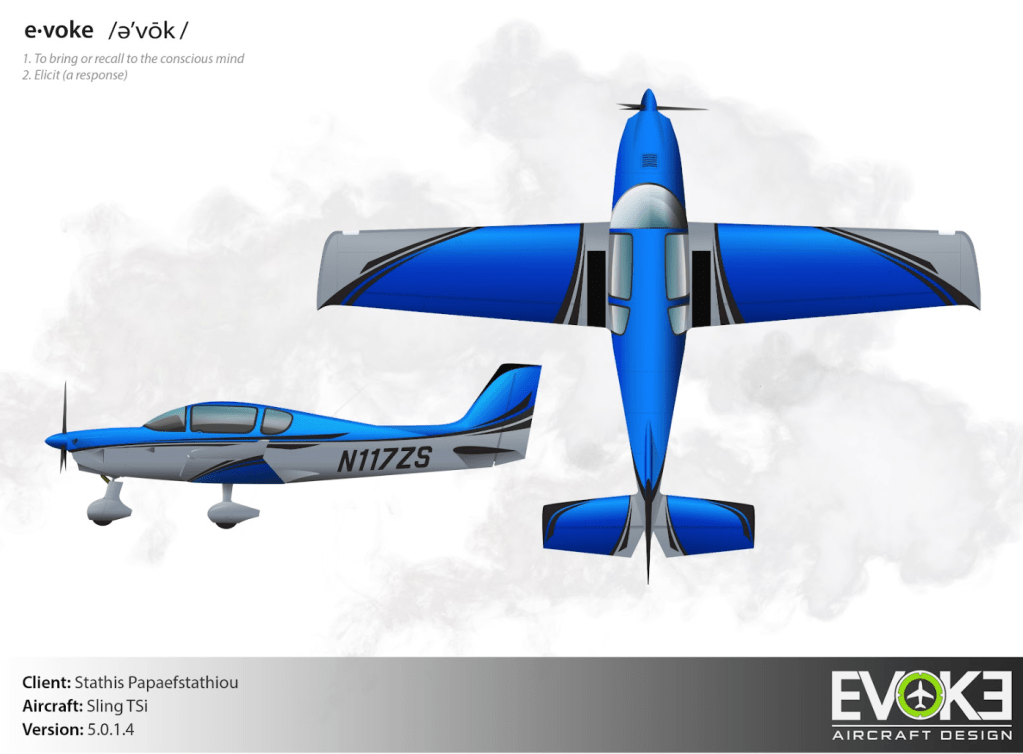
Walking into the hangar and seeing it in person was different.
The colors landed exactly where I had hoped they would when I first outlined the design in my earlier paint post. The scheme is simple and intentional — clean transitions, restrained accents, no unnecessary flash. It has presence without shouting. The proportions feel balanced from nose to tail, and the subtle contrast gives the airplane depth depending on how the light hits it.
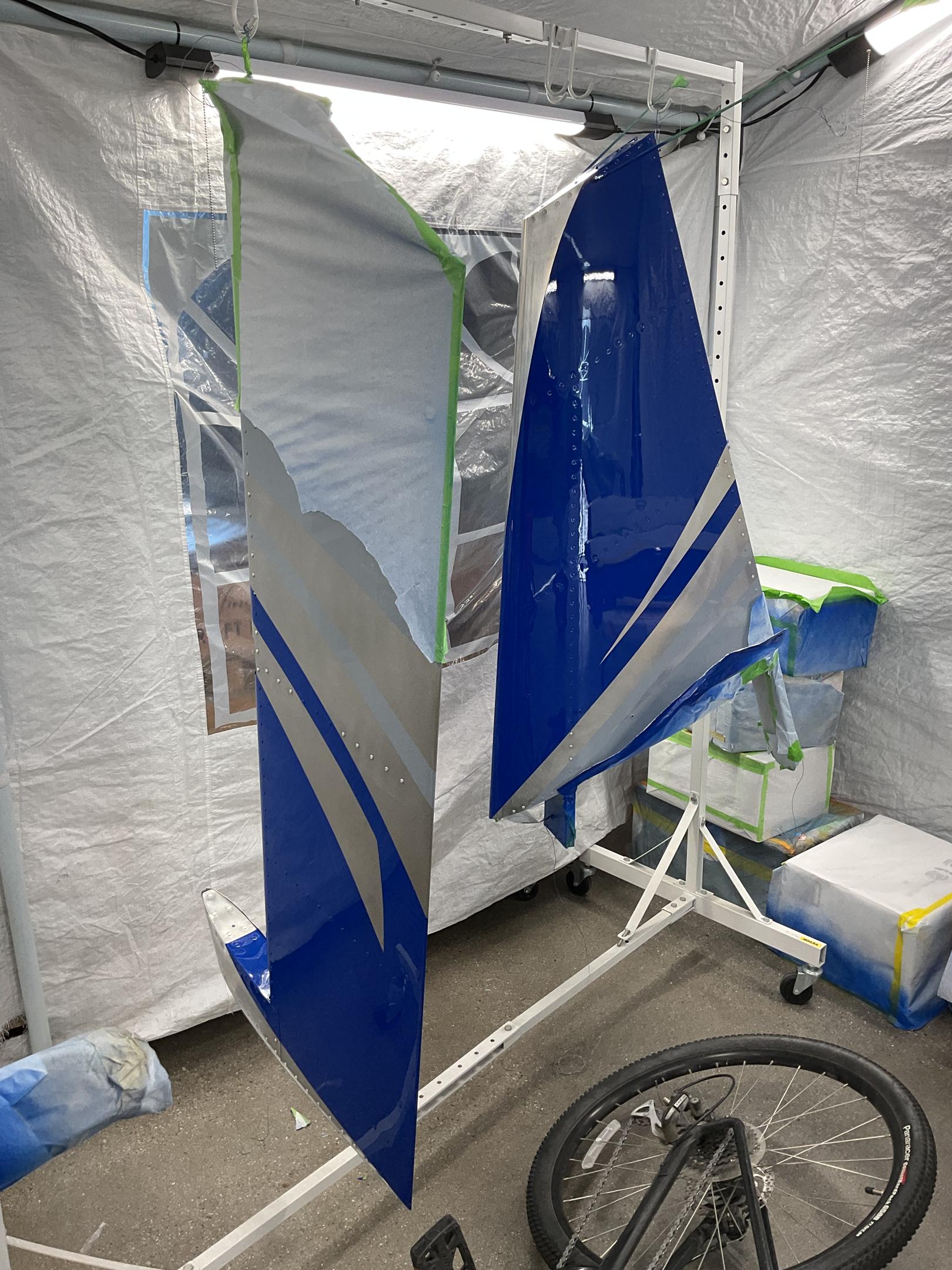
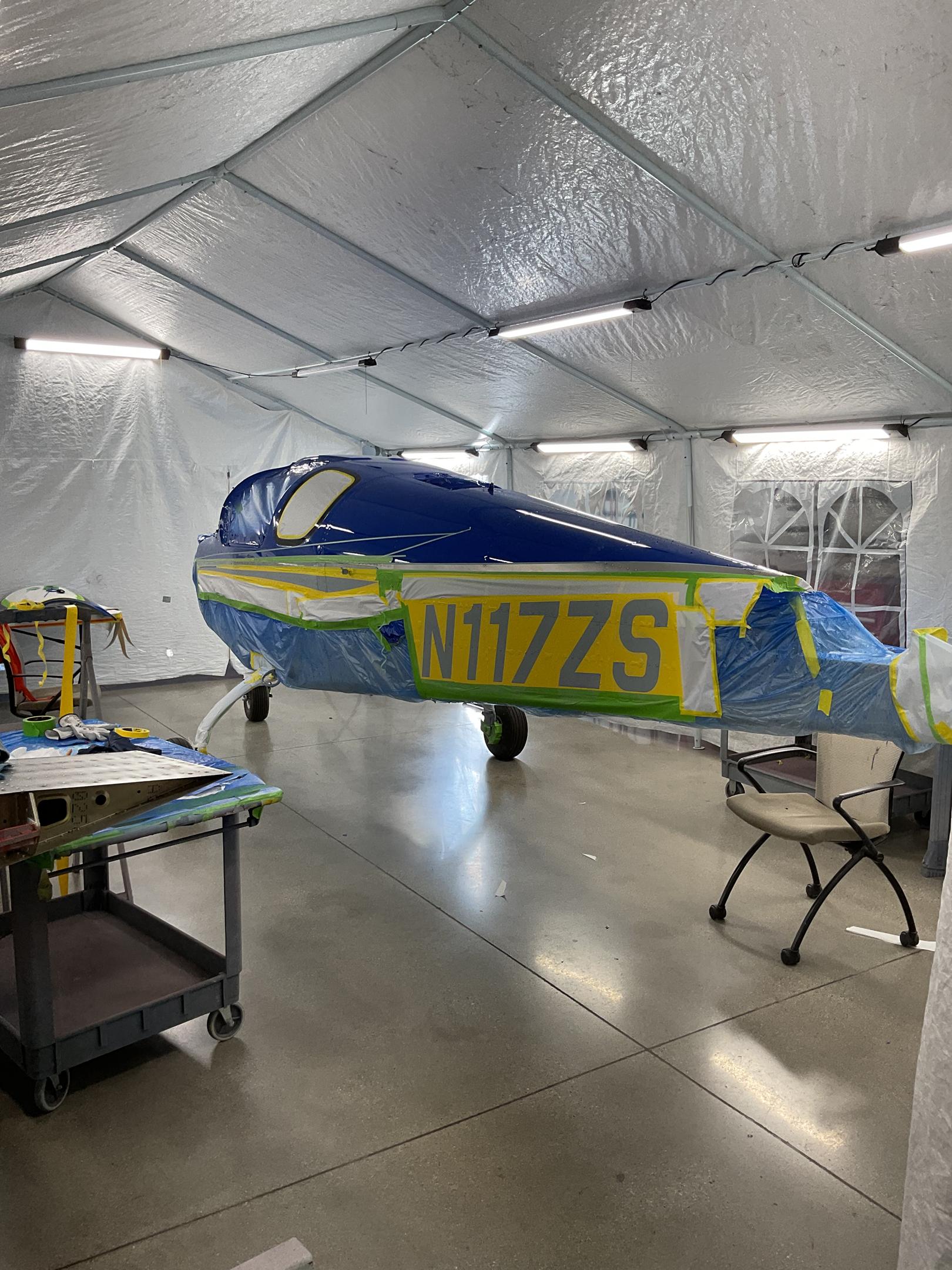
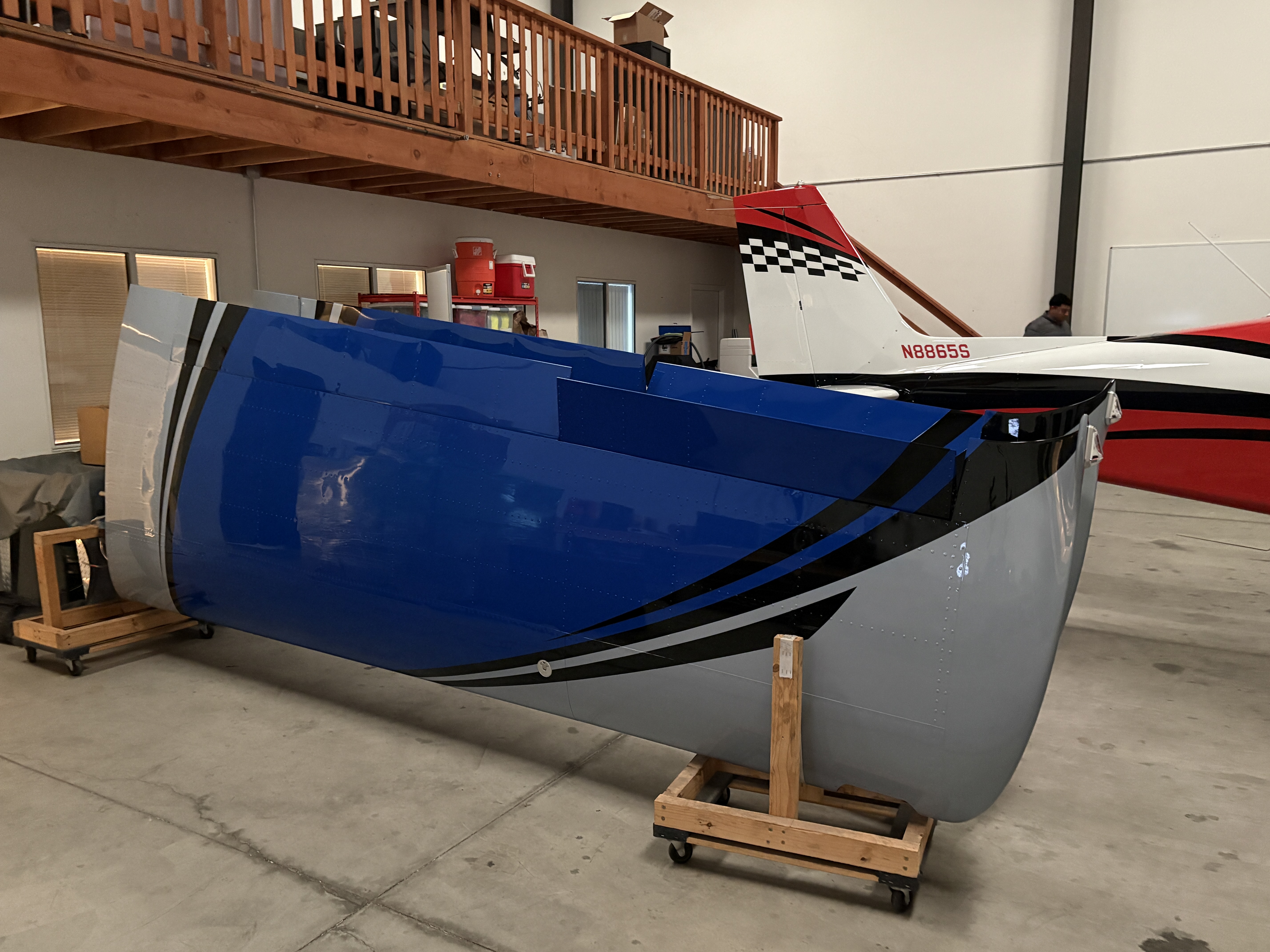
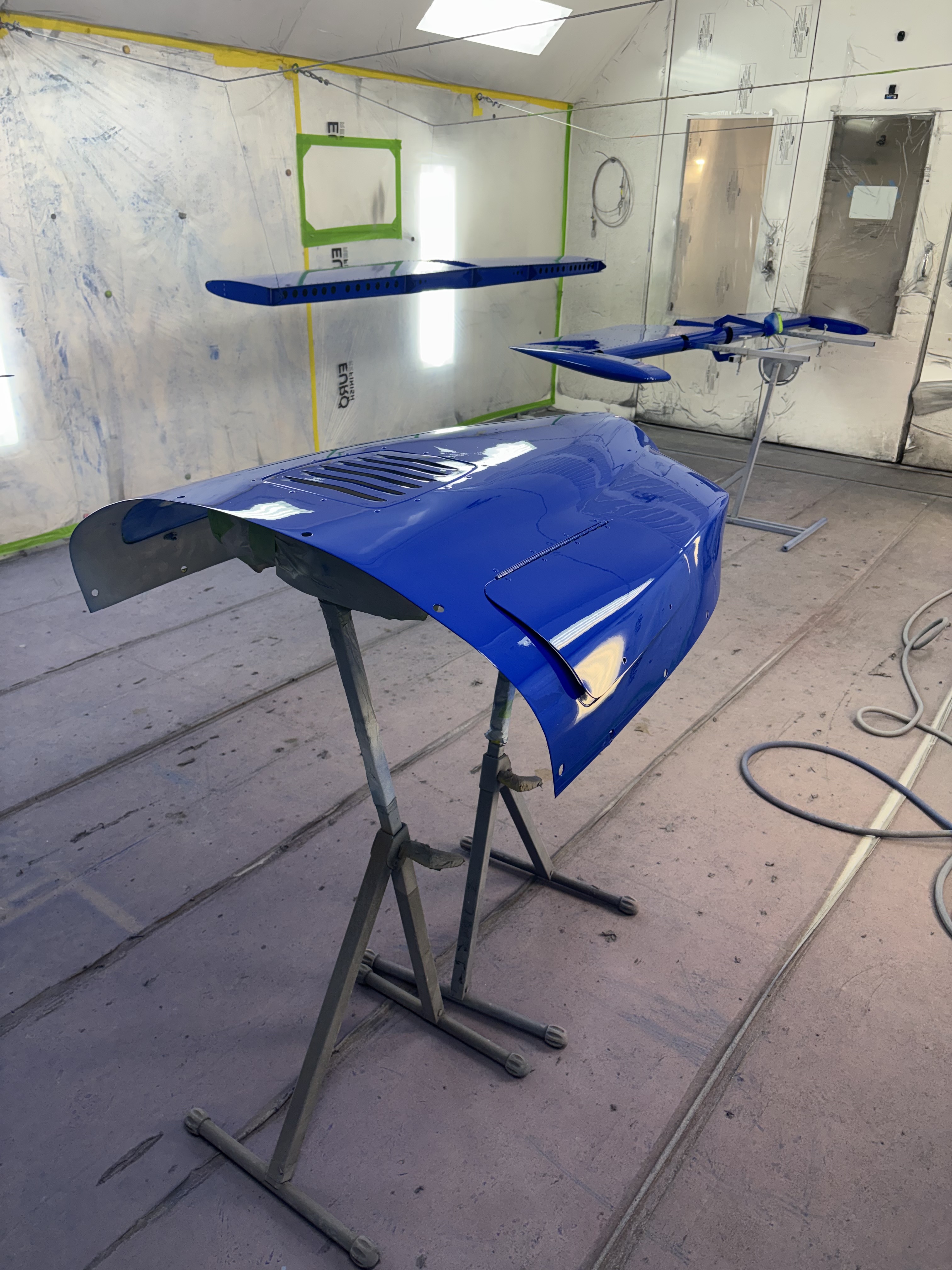
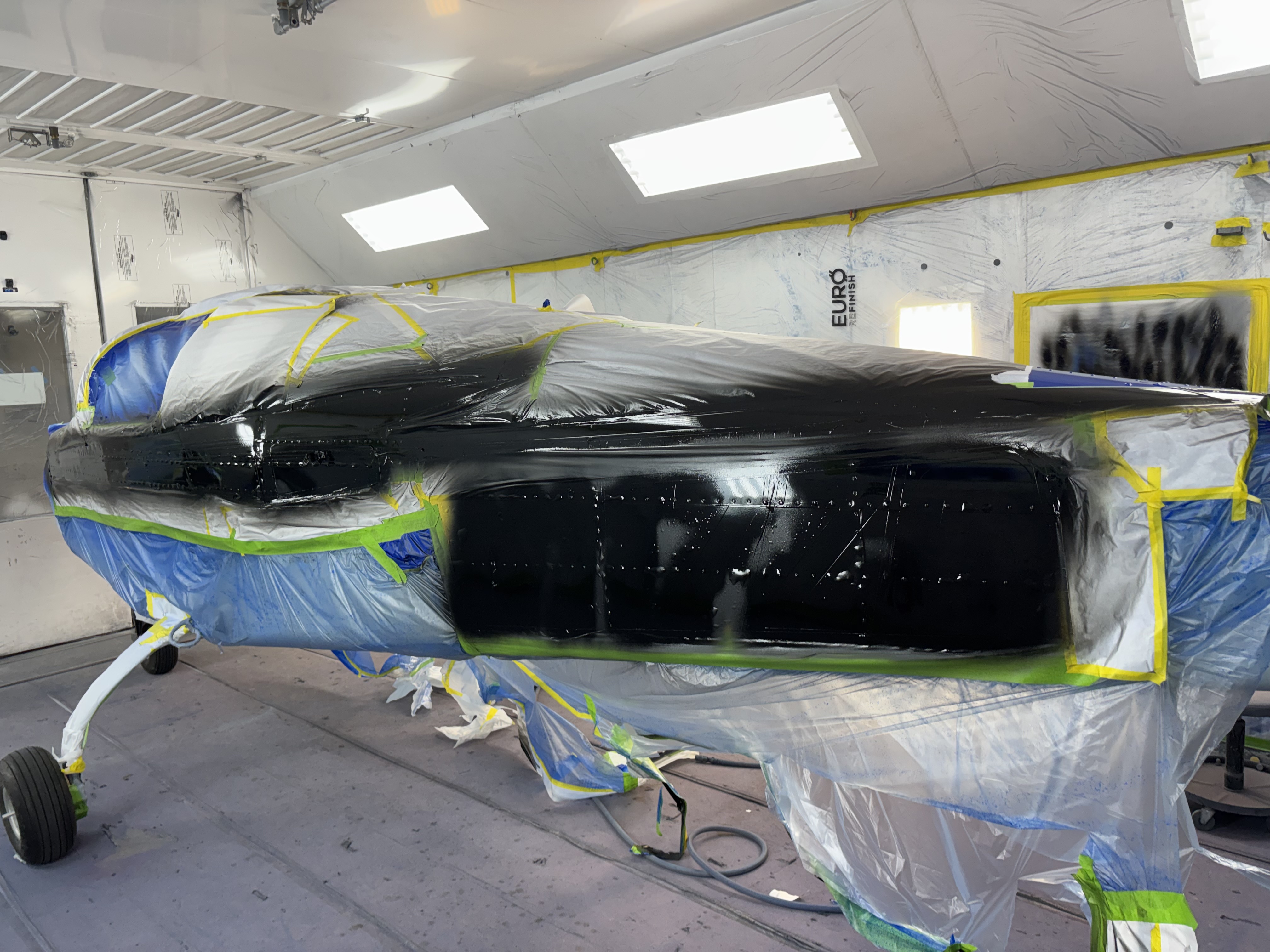
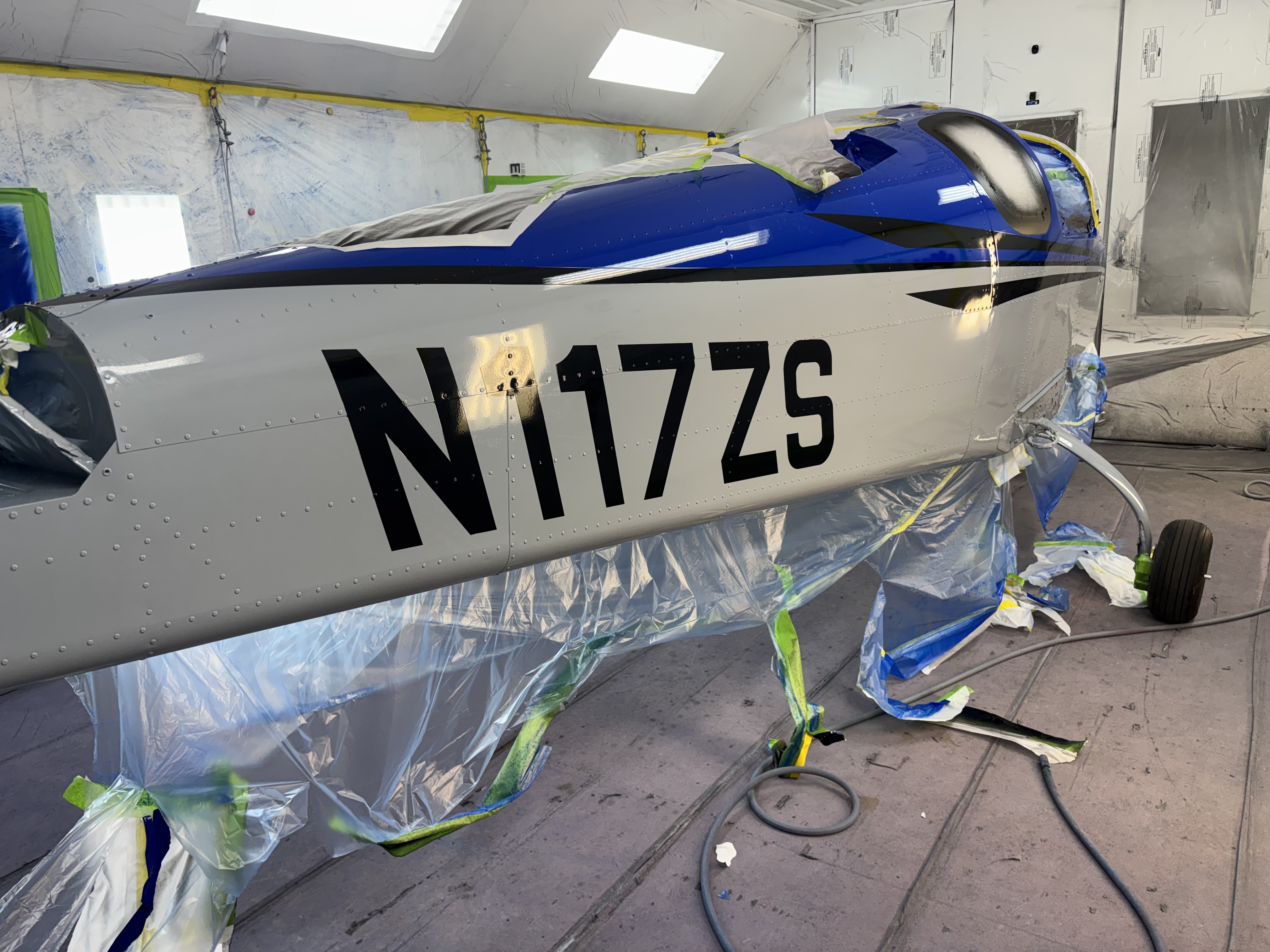
What struck me most was how cohesive it felt. Months ago, this was a discussion about tones and ideas. Now it reflects light. It casts shadows. It feels finished. For builders, this is a psychological shift: before paint, you’re constructing. After paint, you’re finalizing an aircraft.
And for the first time, standing there in Torrance, I wasn’t looking at a project. I was looking at my airplane.
Finalization: Where Everything Converges
If painting is the emotional milestone, finalization is the intellectual one.
This is the phase where dozens of independent workstreams — interior, avionics, controls, firewall-forward, lighting, safety systems — all converge into a single integrated machine. It’s less dramatic than hanging an engine or mating wings, but in many ways it’s more demanding. Now, nothing can live in isolation. Every system touches another.
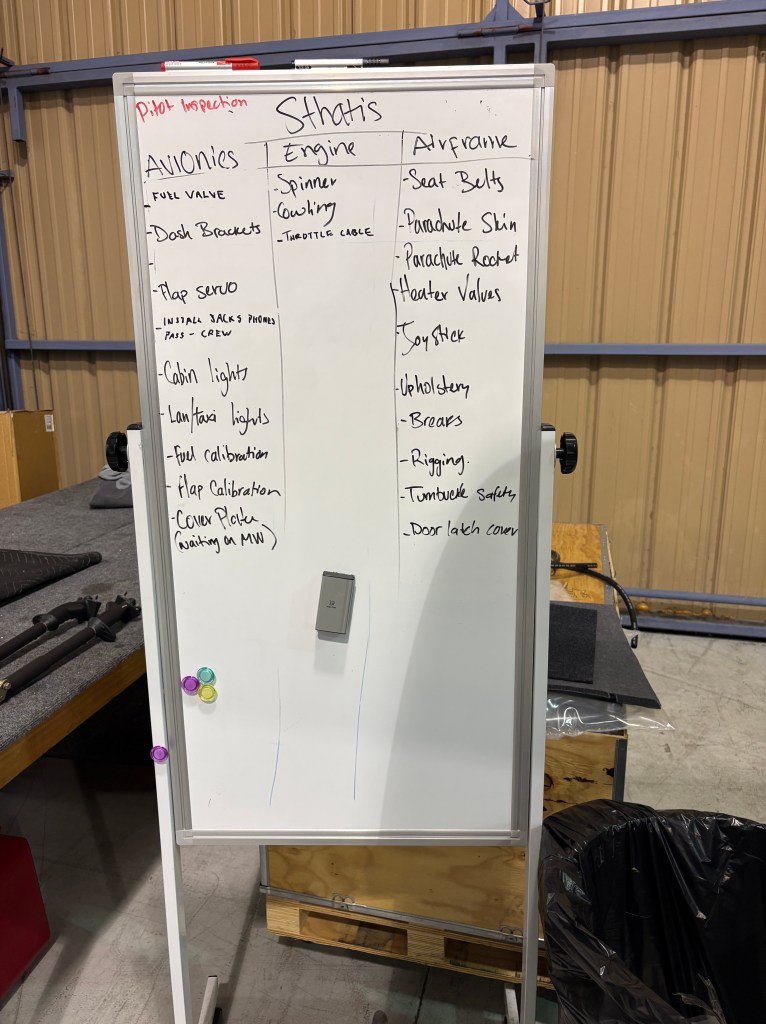
The team had already been working in this phase for over a week before I arrived. My role during this visit shifted. Instead of long hours drilling and riveting, I found myself observing, verifying, asking questions, and occasionally stepping in where it made sense. It’s a different kind of engagement — less physical, more holistic. You’re no longer focused on a component. You’re thinking about the airplane as a system.
Finalization also exposes the discipline of the build. Wiring must be tidy because now everything is powered. Control linkages must be precise because soon they’ll be moving control surfaces. Brake lines, throttle cables, autopilot servos, ELT wiring — each subsystem has to be installed, secured, tested, and cross-checked.
This is the quiet complexity before first engine start.
It doesn’t make for dramatic photos, but it’s where confidence is built — bolt by bolt, connection by connection.
Avionics: First Light
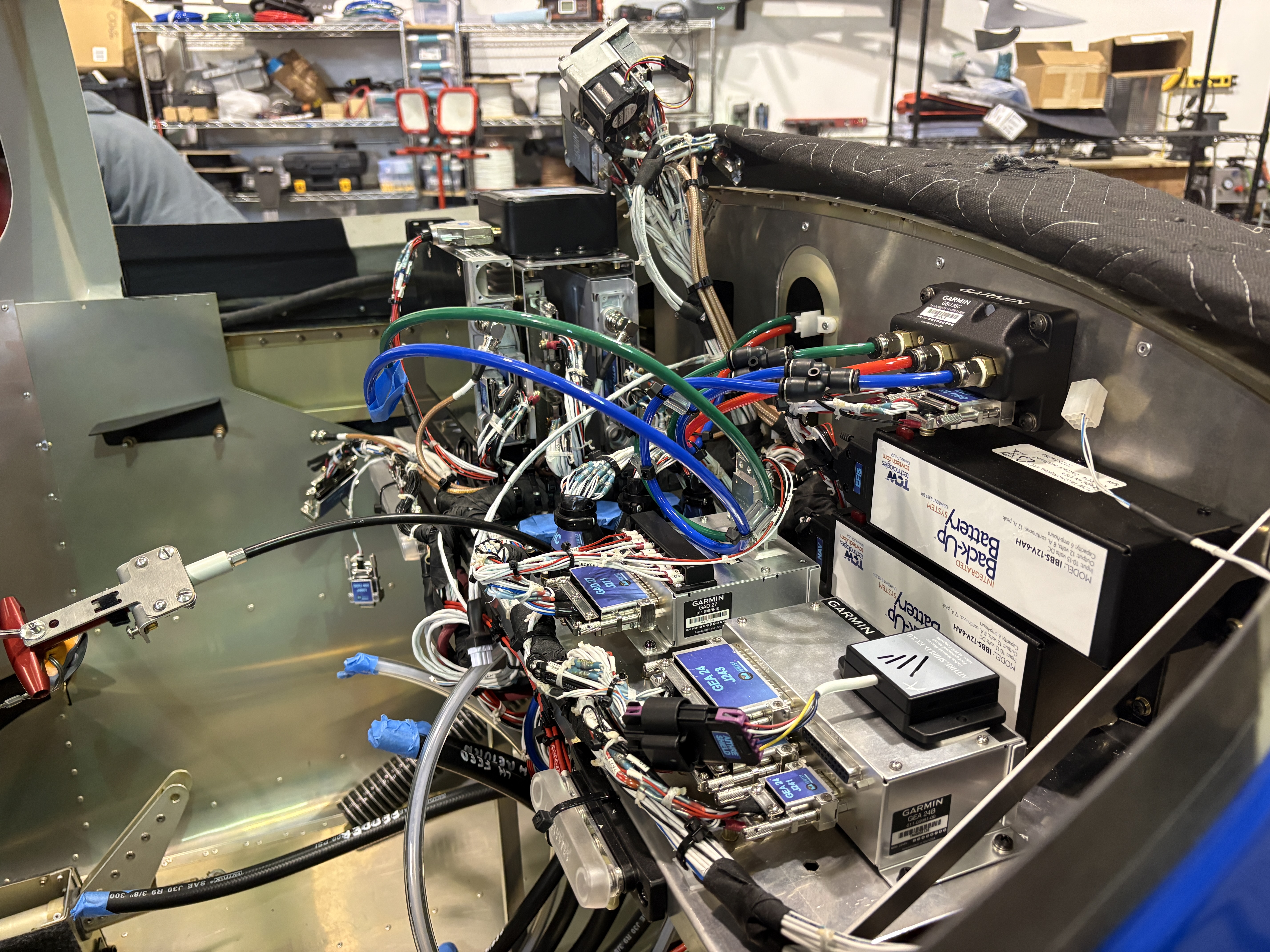
When I arrived, the avionics harness from Midwest Panels had already been installed — a task that took the team the better part of a week. That alone tells you how dense this stage is. Behind every clean panel face lives an intricate network of connectors, labeled bundles, and carefully routed wiring that has to work perfectly the first time.
I walked in just as the front end of the panel was being installed. Screens slid into place. The GTN 650Xi was mounted. The GFC 507 controller settled into its position. It’s one thing to approve a panel layout on paper. It’s another to see it physically assembled in your airplane.
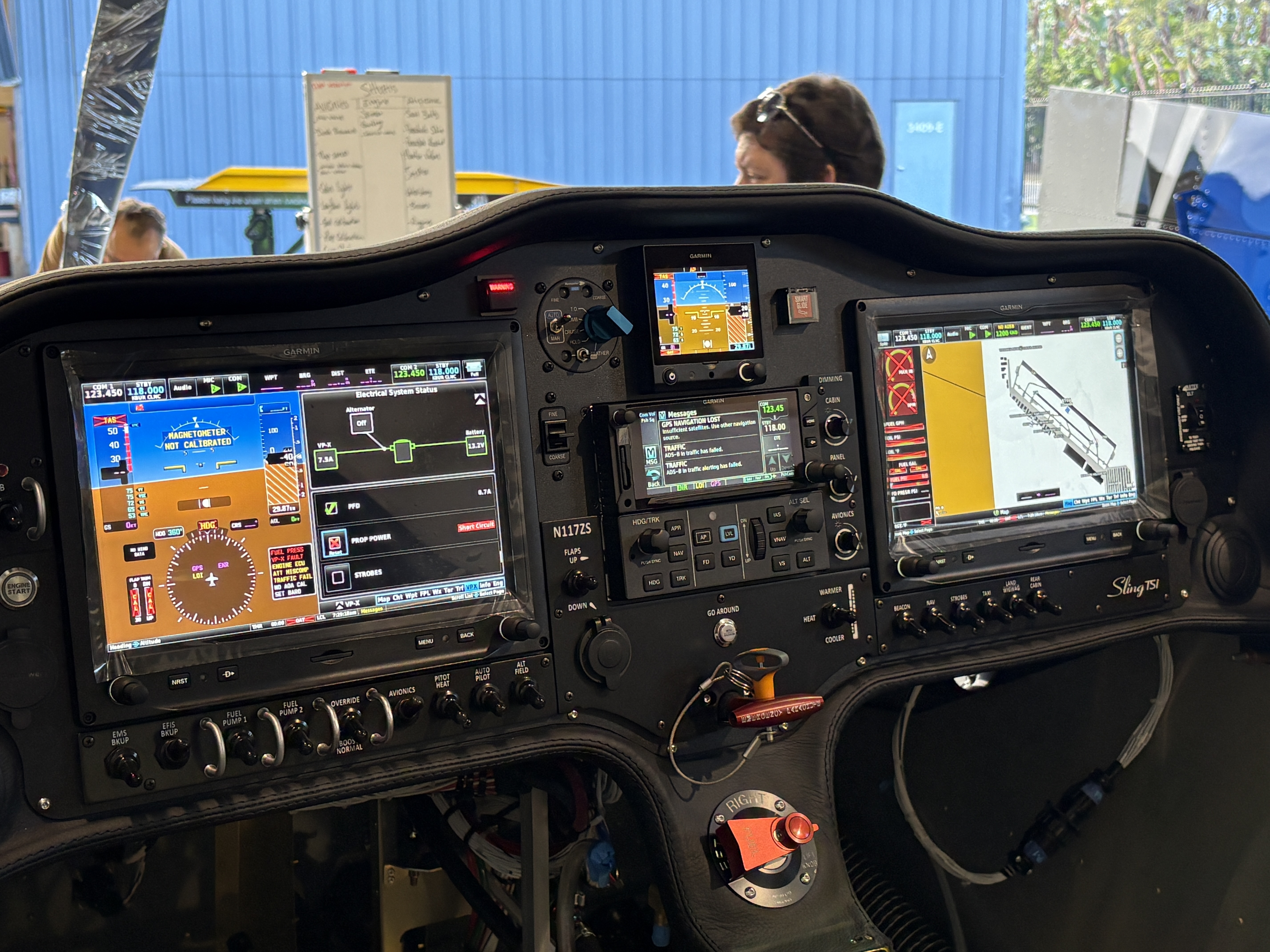
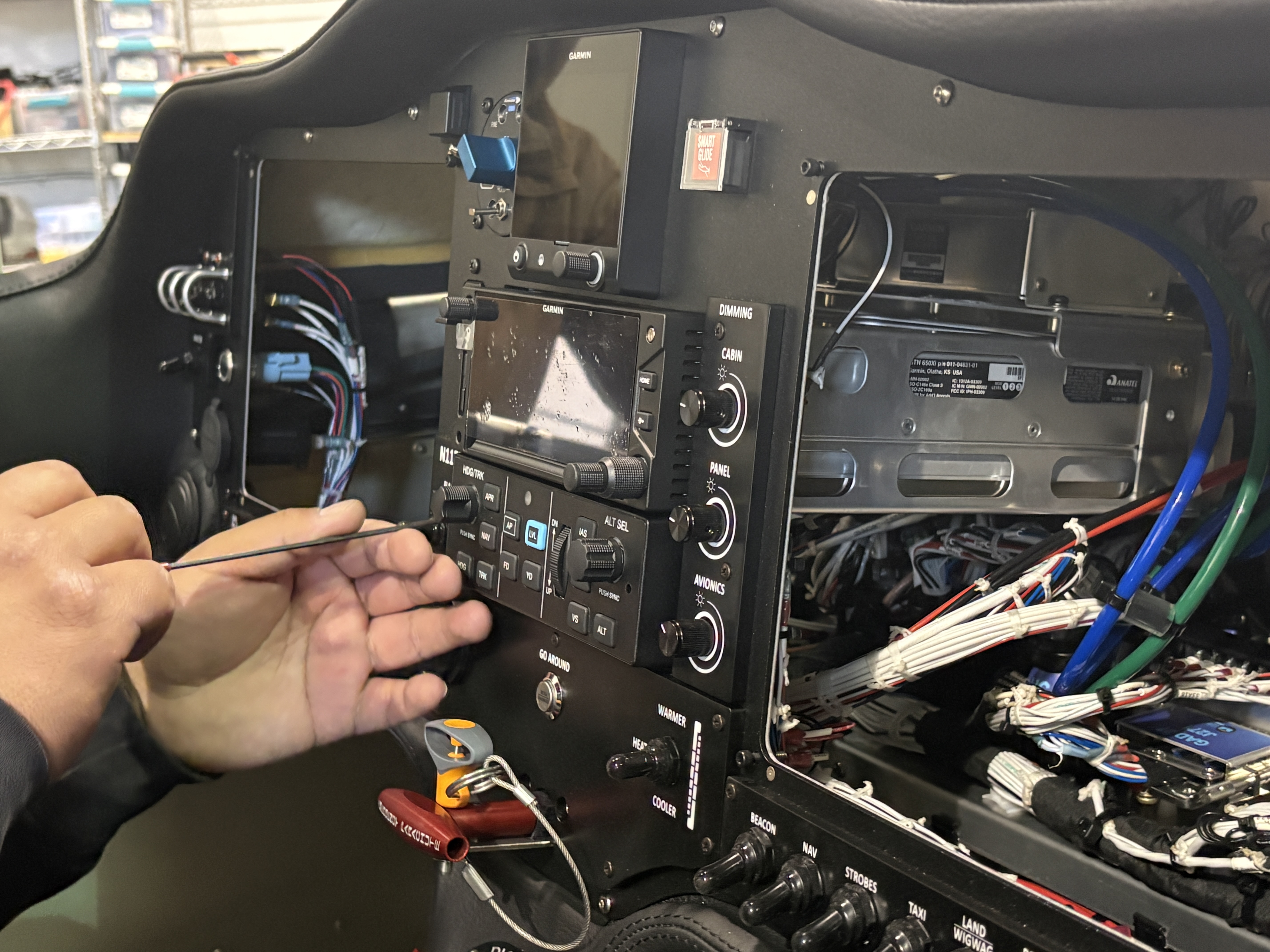
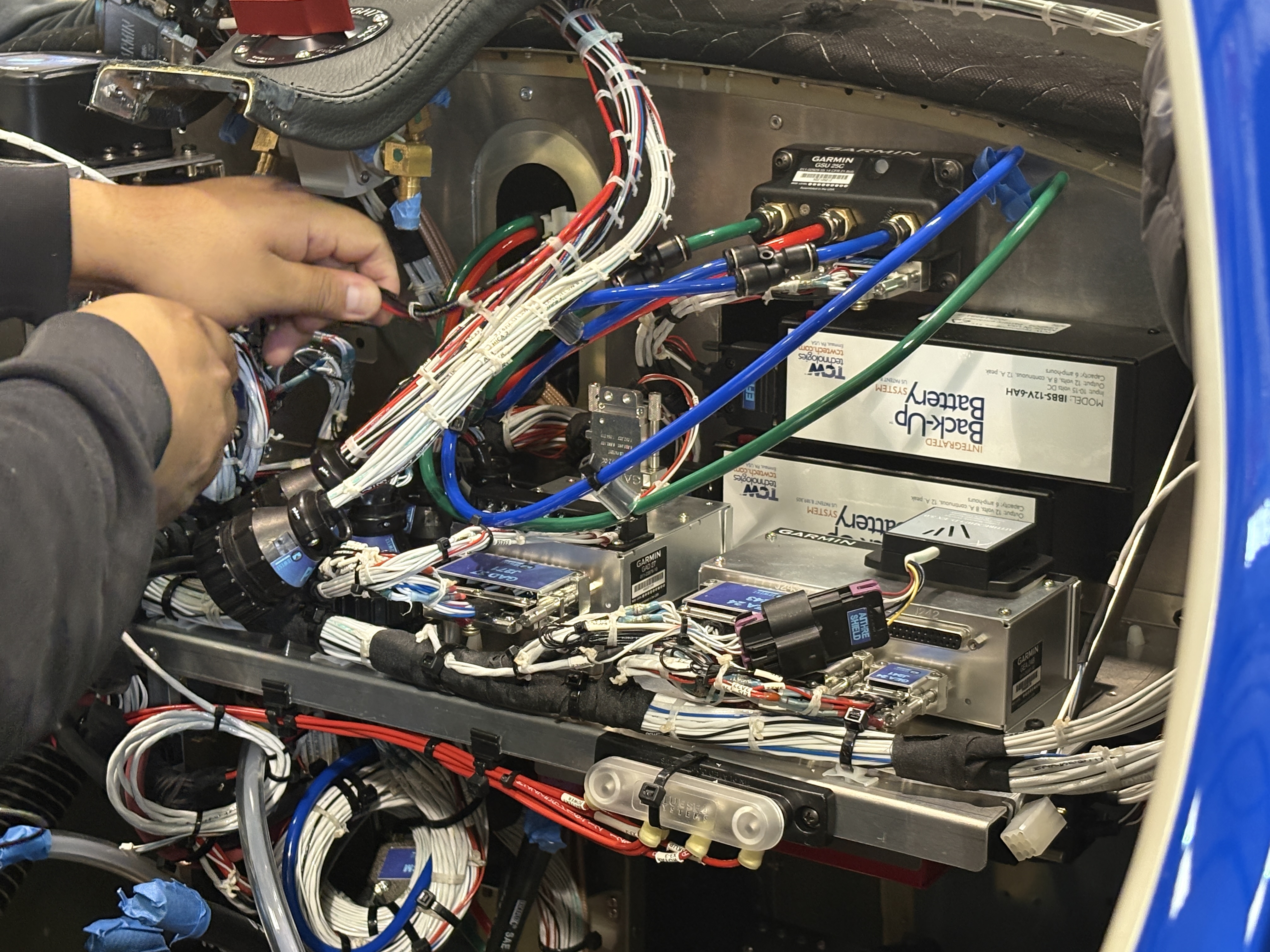
And then came the moment: first power-up.
The screens came alive almost immediately. No drama. No smoke. No frantic troubleshooting. There were a couple of minor items — a fuel tank configuration setting that needed adjustment, a small pin misconfiguration, and an external alternator wiring issue that the VP-X helped us quickly identify. Within about an hour, the initial squawks were resolved.
What struck me most was how transparent the systems feel with modern avionics. The VP-X makes the electrical architecture visible rather than mysterious. You can see loads, circuits, and faults in real time. It even helped us catch the alternator wiring issue early. That kind of clarity builds confidence.
There’s still more configuration to come after engine start — magnetometer calibration and system tuning — but seeing the G3X displays, the GTN, and the integrated systems come to life was a defining moment. This wasn’t a mockup anymore. It was a functioning cockpit.
An Unexpected Addition
One surprise: the airplane included the Intellikey NG-R system, which I hadn’t explicitly ordered. It adds a car-like start experience and enables flight data interaction through your phone. Earlier versions reportedly had some growing pains, but this is now version three, the setup was smooth, and there are enough safeguards to reduce the chance of Intellikey draining the battery, an issue in earlier versions of the system. I paired my phone, connected through Connext to the GTN, and spent some time exploring the integration between the GTN and G3X screens.
For someone who learned to fly behind steam gauges, the contrast is striking. The cockpit now feels less like a collection of instruments and more like an integrated system.
And watching it boot for the first time — in my airplane — is something I won’t forget.
Airmaster Propeller: Engineering in Motion
By the time I arrived, the propeller was already installed — though the spinner had not yet been mounted. Even without it, the transformation was immediate. The nose no longer looked like an engine installation in progress. It looked purposeful.
This was my first opportunity to really study the Airmaster Propellers hub and control system up close. On paper, an electrically controlled constant-speed propeller sounds almost abstract. In person, it’s beautifully mechanical. The compact motor integrated into the hub, the rotating slip-ring disc, the brush system transferring power and control signals — it’s an elegant interface between electricity and aerodynamics, all happening at the front of the airplane.
You can read about this engineering. Seeing it mounted on your own engine is different.
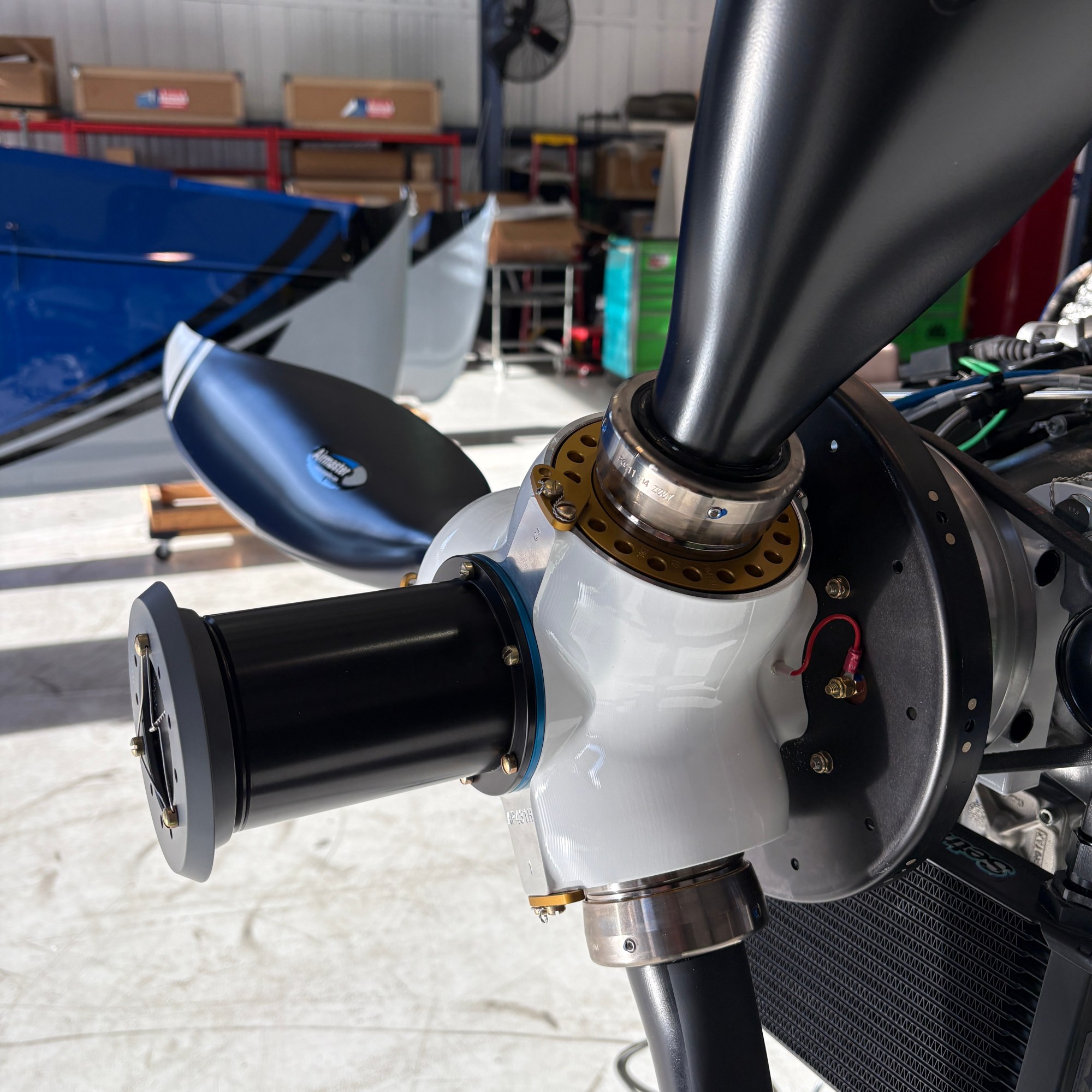
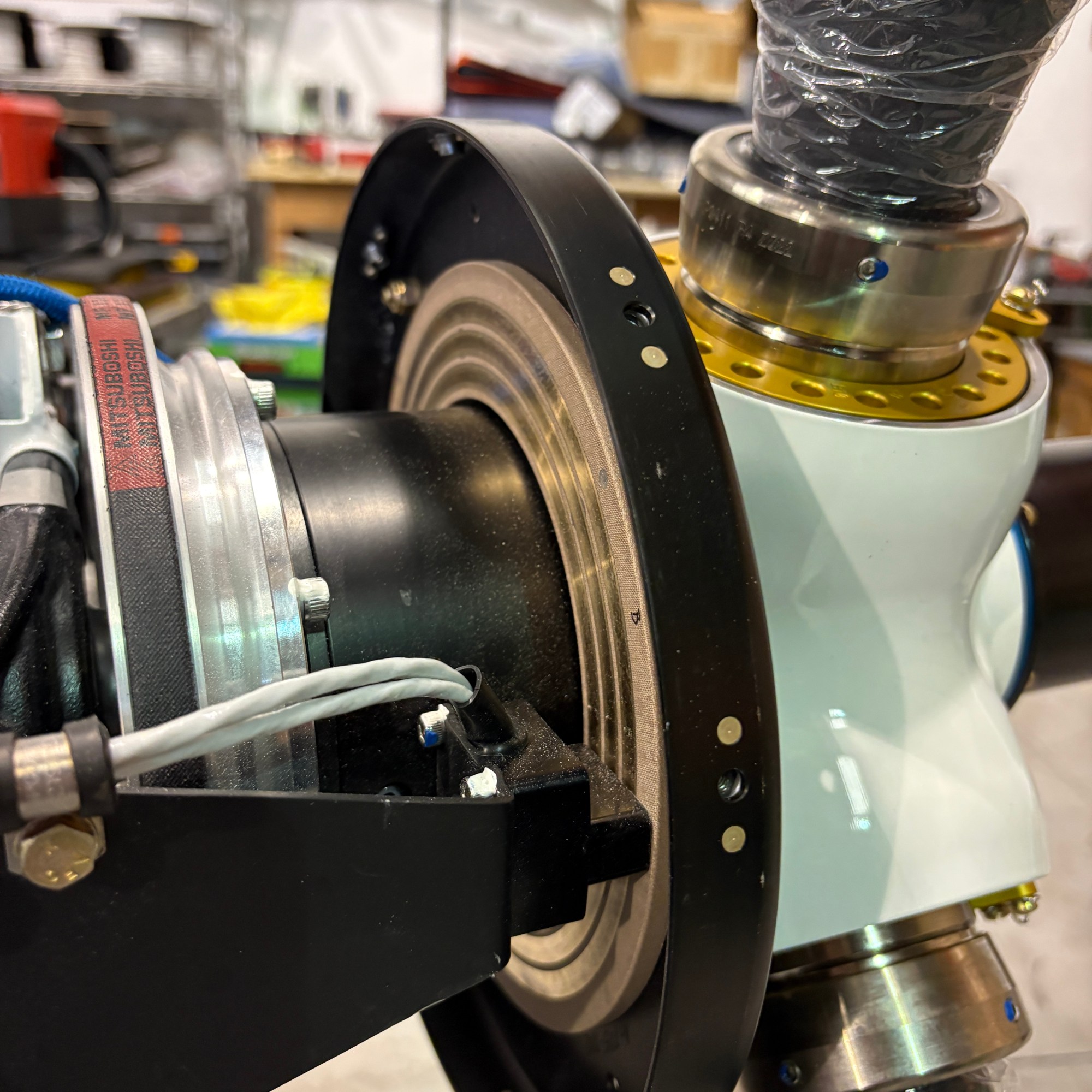
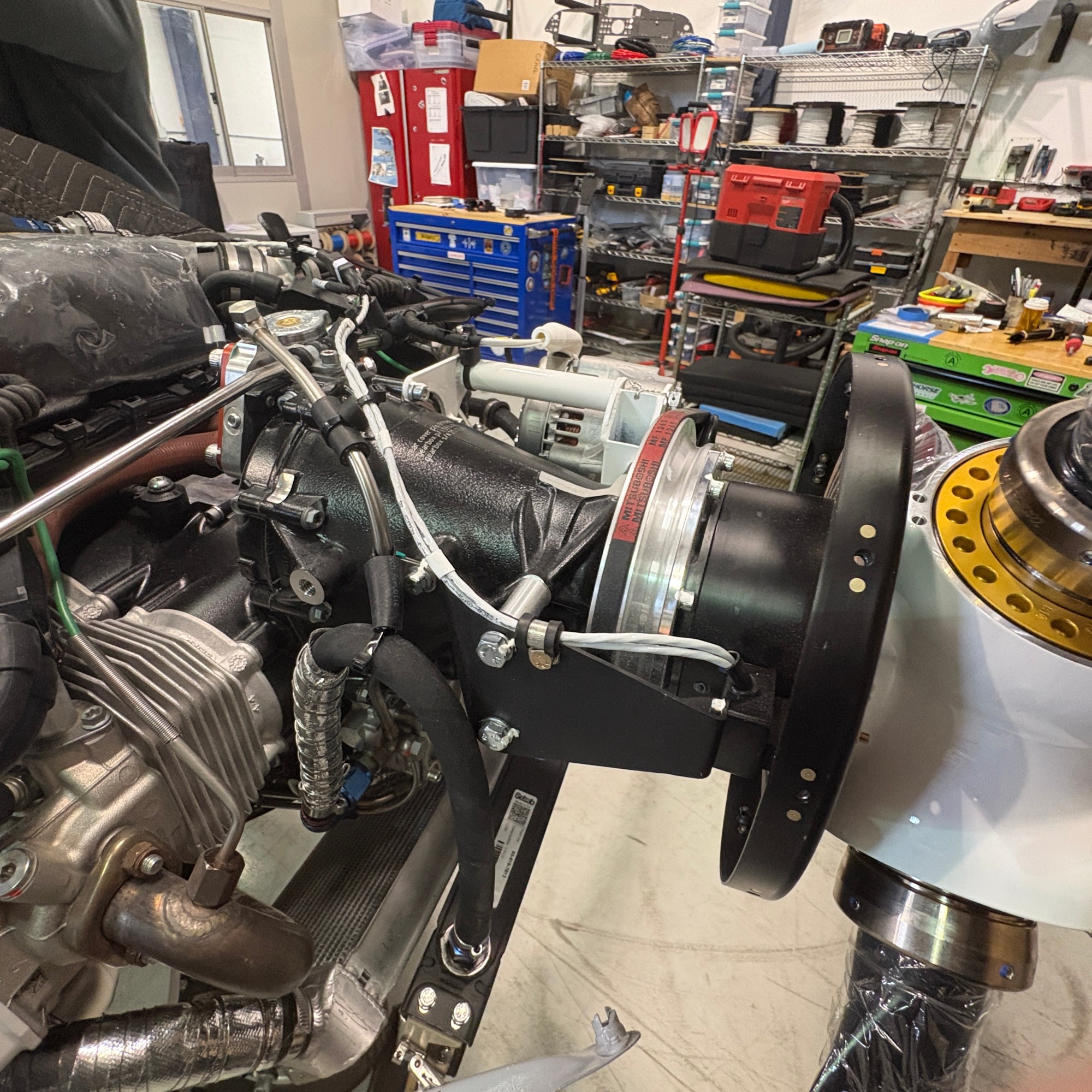
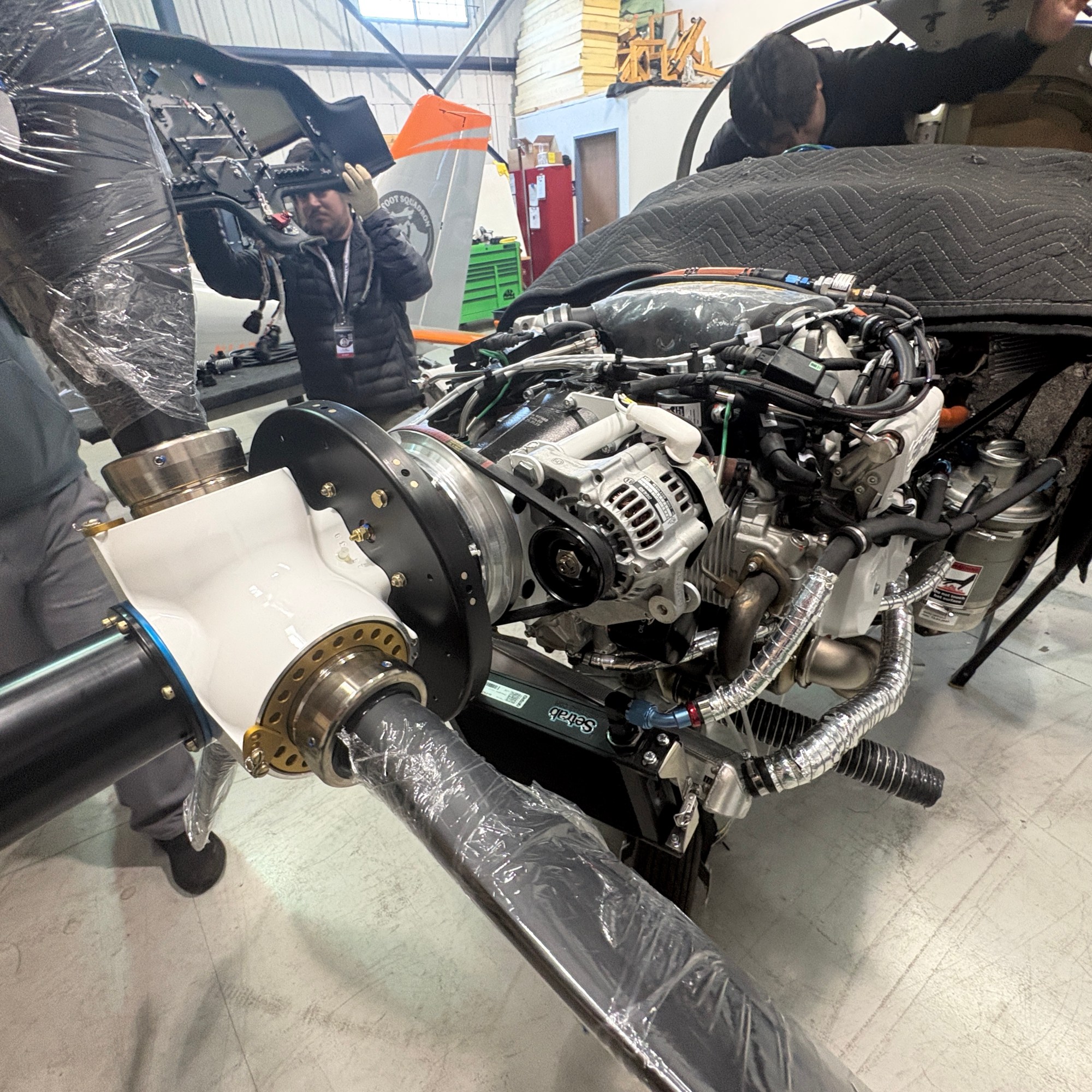
We powered up the controller and went through the blade pitch calibration process. Watching the blades smoothly sweep through their range of motion gives you a quiet appreciation for the precision involved. This isn’t just about takeoff performance or cruise efficiency — it’s about repeatability and control.
I also uncovered a small assumption error on my side. I had believed the blades were Whirlwind, based on what I saw on the Airmaster website. In reality, they are SNR72K full carbon foam-core blades from Sensenich Propeller. No disappointment there — Sensenich has a strong reputation, and the blades look excellent. The misunderstanding simply came from not reviewing the exact order configuration closely enough.
Lesson reinforced: always verify, even when you’re confident.
Wings: From Components to Aircraft
The biggest physical milestone during my visit was wing installation.
Up to this point, the fuselage sat confidently on its gear, systems coming alive inside, but visually incomplete. The wings had been assembled earlier, lights installed and wiring run, waiting for this moment. Mating them to the fuselage is surprisingly quick — but it’s not casual work.
It took five of us. Three lifting and guiding, one inside the fuselage aligning and directing, and one underneath managing connections at the wing root. There’s choreography to it. Slow movements. Constant communication. Small corrections measured in millimeters.
When the spars slide home and the hardware is secured, something changes instantly. The proportions snap into place. The airplane finally occupies the full footprint it was designed to have. You step back, and it no longer looks like a project mid-assembly — it looks structurally complete.
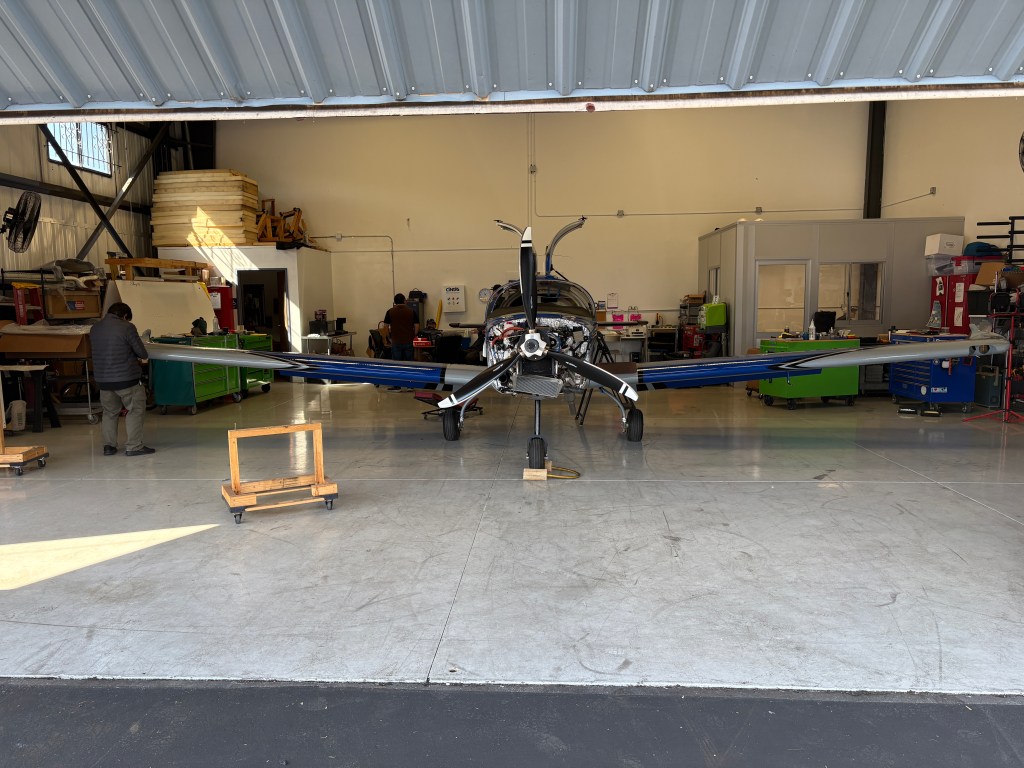
Of course, installation is only the beginning. Once mounted, the control systems must be connected and rigged. Aileron linkages are attached and calibrated. Rudder controls are verified. Landing and taxi lights are connected and tested. Navigation lights, which were preinstalled during wing assembly, are checked again as part of the integrated system.
Rigging controls isn’t glamorous work, but it’s foundational. This is where precision matters. Small adjustments now translate into stability and harmony in flight later.
For builders, this is one of those milestones that hits harder than expected. Seeing the airplane with its wings attached — even temporarily, since they will be removed again before transport — creates a shift. It’s no longer theoretical. It’s dimensional. It has span. It has presence.
My Little Project: The Middle Console
While much of this visit was about observing larger systems coming together, I did get a hands-on assignment: assembling the middle console.
Compared to mounting wings or booting avionics, it’s a modest task. But that’s part of what made it satisfying. After days of watching highly integrated systems being installed, it was grounding to focus on something mechanical and tactile — drilling, riveting, aligning, fitting components carefully into place.
The console had just received the throttle and brake plate from Midwest Panels. The rudder motor sits beneath it, so everything had to align cleanly before installation. Once assembled, the console was installed in the fuselage, the throttle cable connected forward to the engine, and the brake linkage tied into the brake lines.
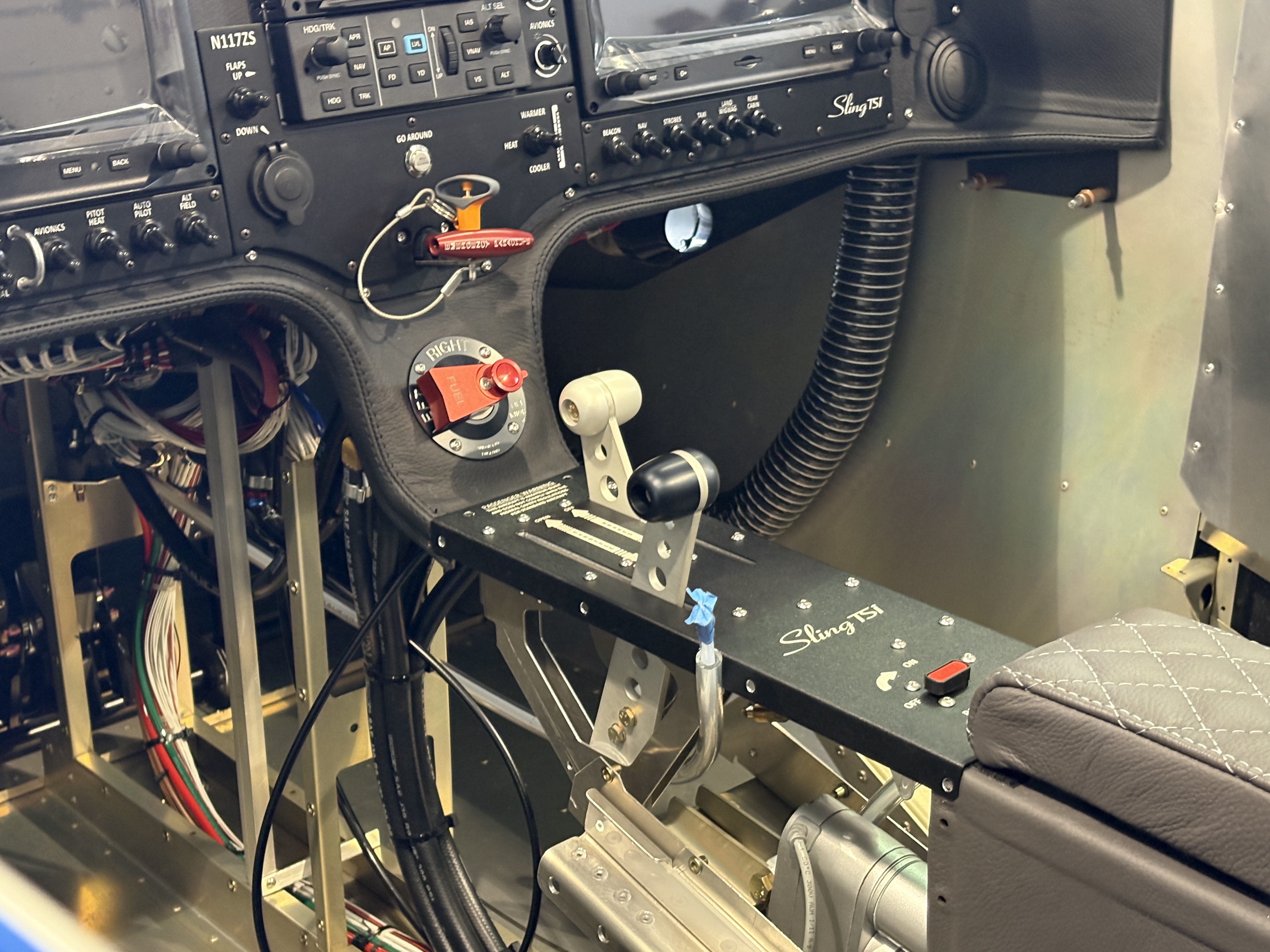
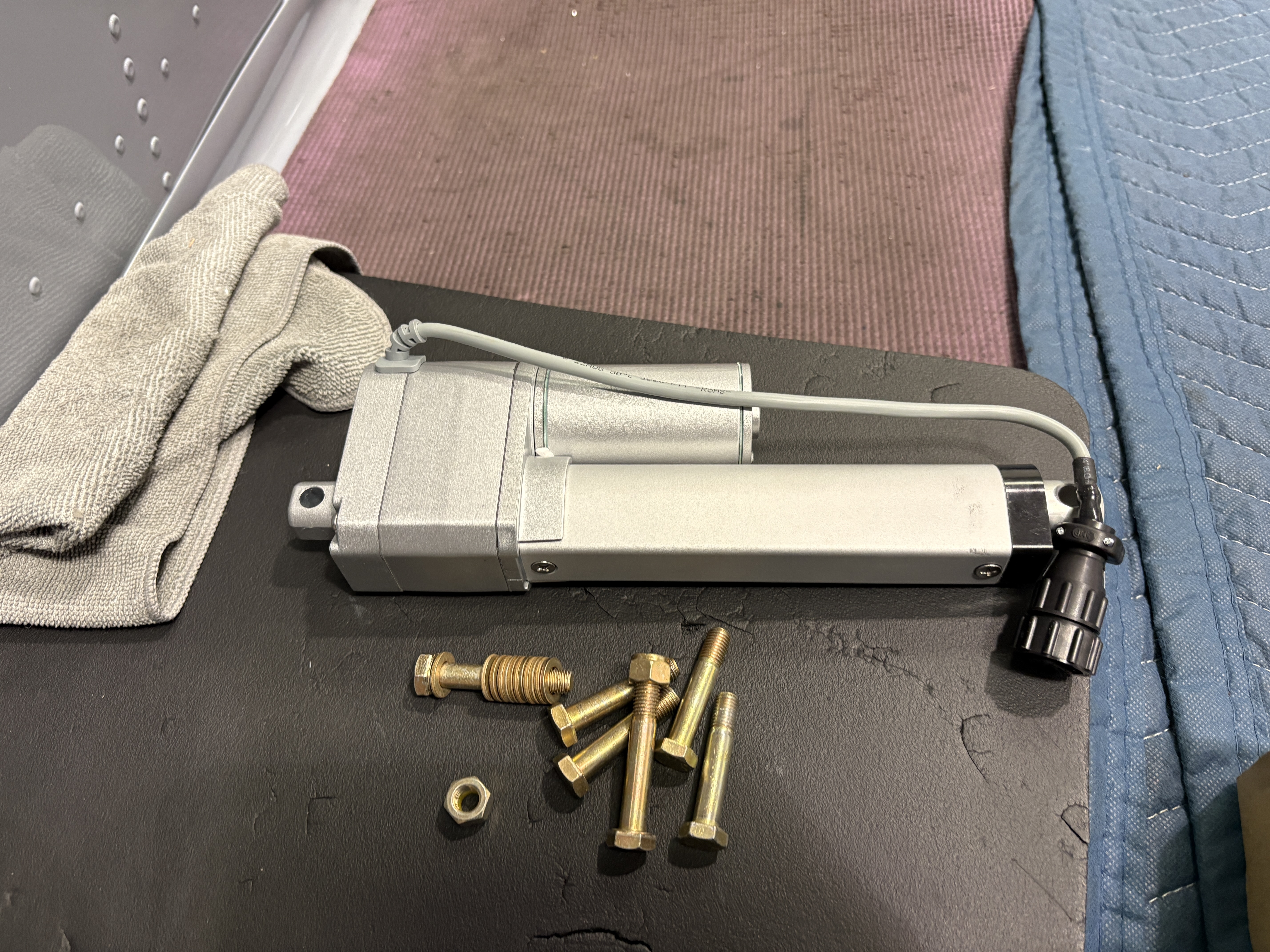
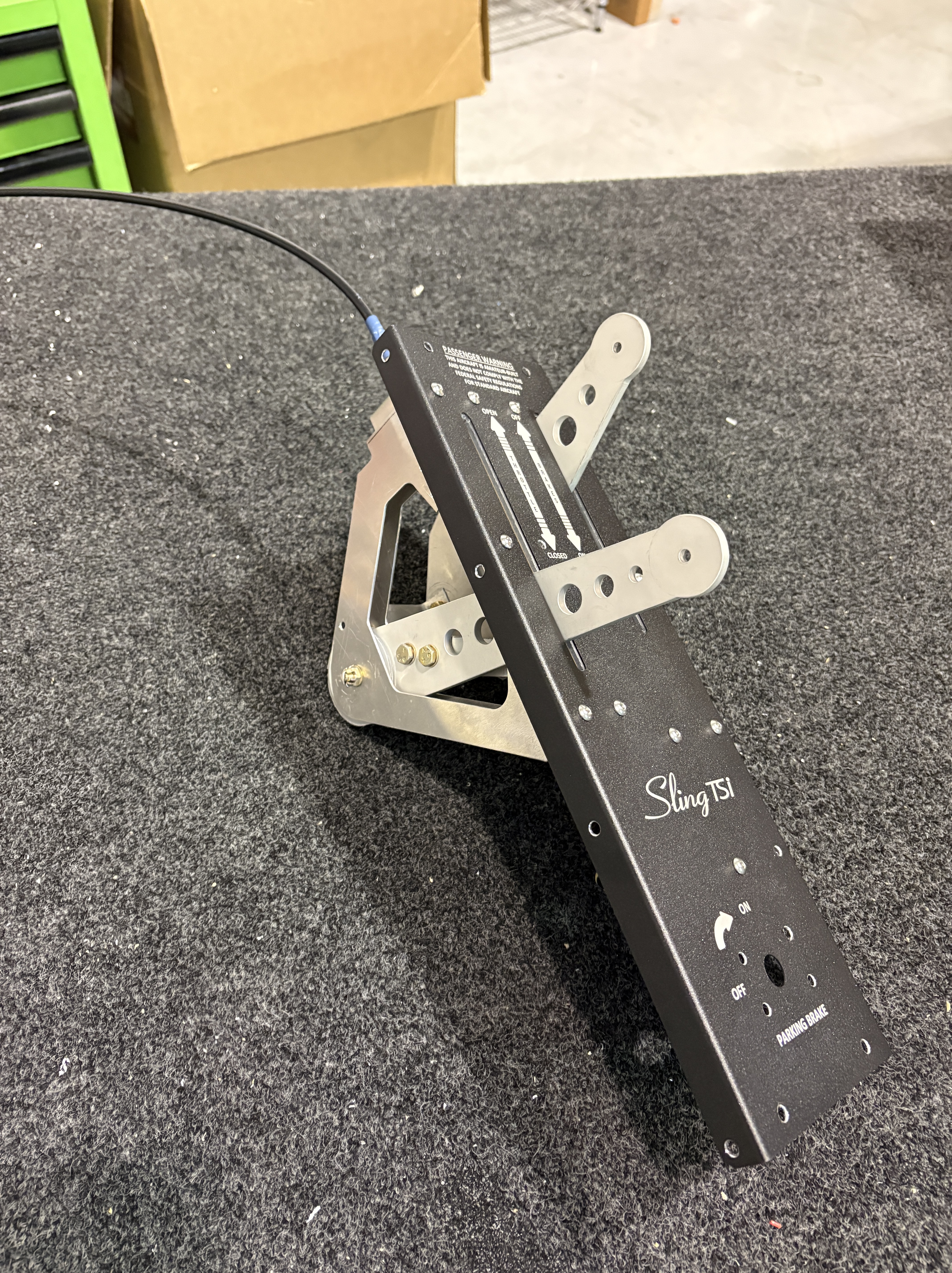
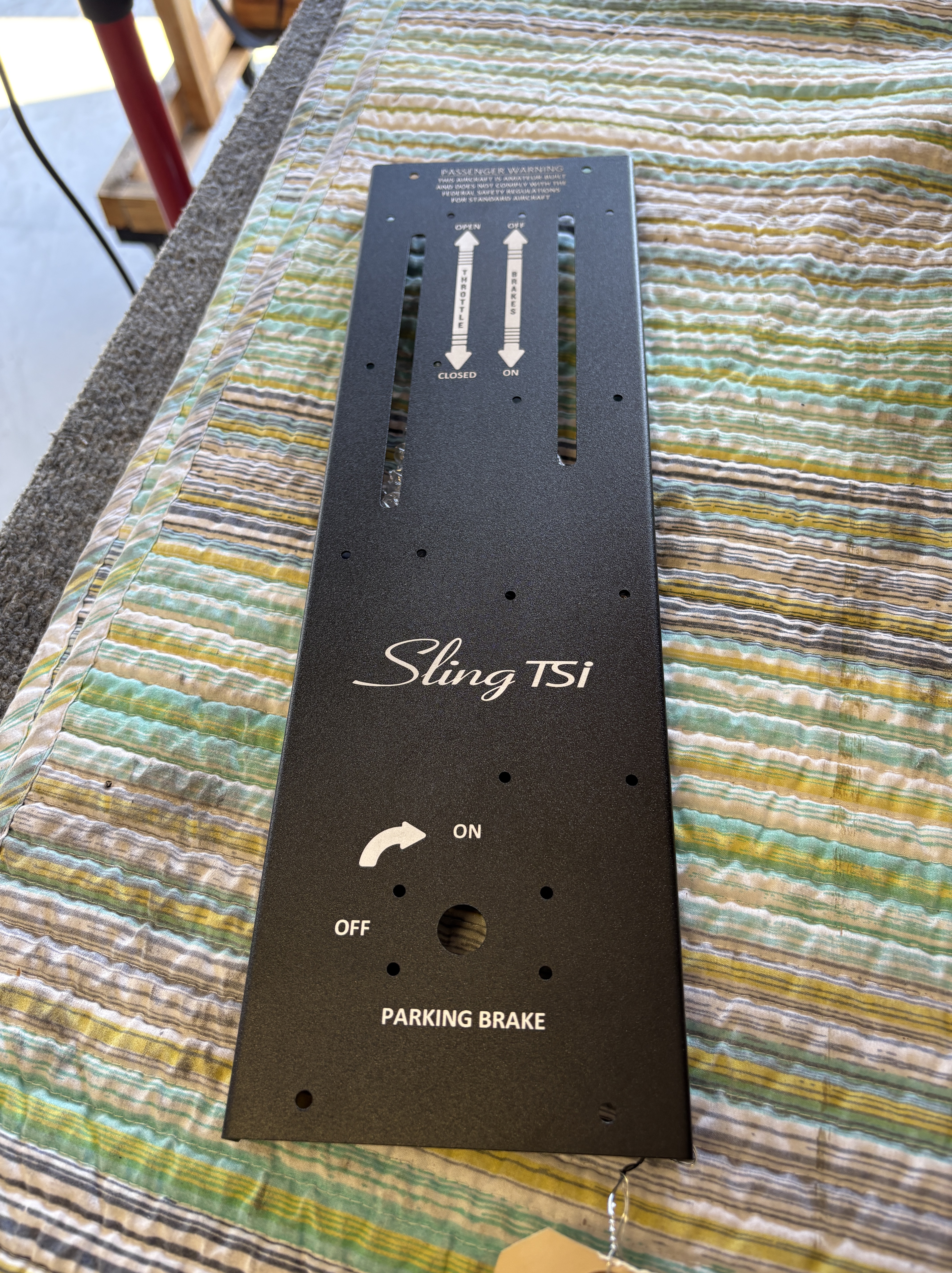
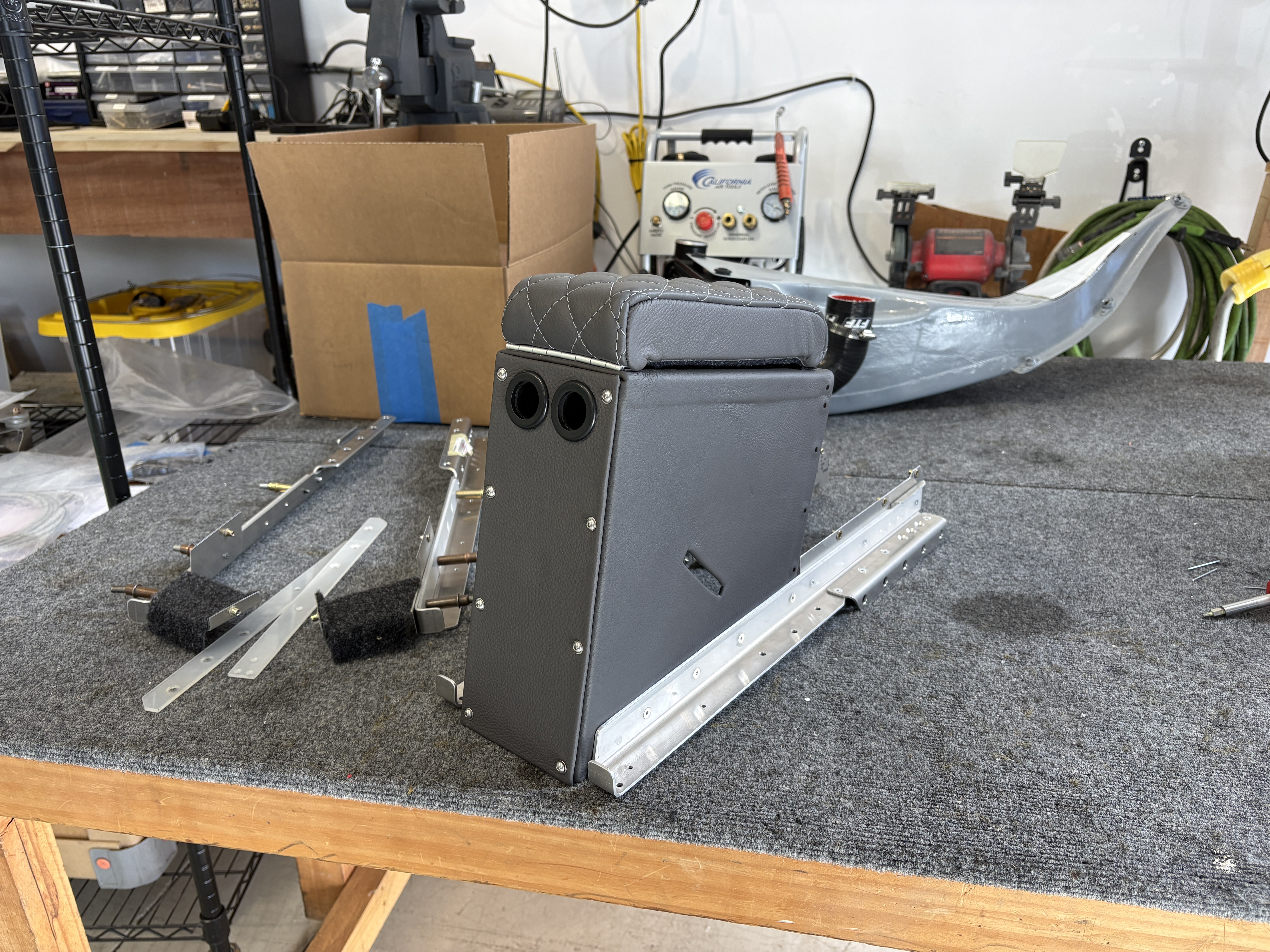
Spending a few hours focused on that assembly reminded me why I chose the factory-assist path in the first place. Even limited hands-on involvement creates ownership. You’re not just signing off on work — you’re physically contributing to the environment you’ll soon be flying in.
Interior & Safety Systems: The Details You Don’t See in Flight
While much of the visible progress was happening on the outside — wings, propeller, panel — quieter work continued inside the fuselage.
One of the team members was installing the carpet-like material in the aft section of the cabin. It’s more labor-intensive than it looks. Aluminum surfaces must be sanded and properly prepared before adhesive is applied. The material then has to be carefully positioned and pressed into place, working around contours and structure. It’s slow, deliberate work — the kind that doesn’t photograph dramatically but significantly changes how the airplane will feel.
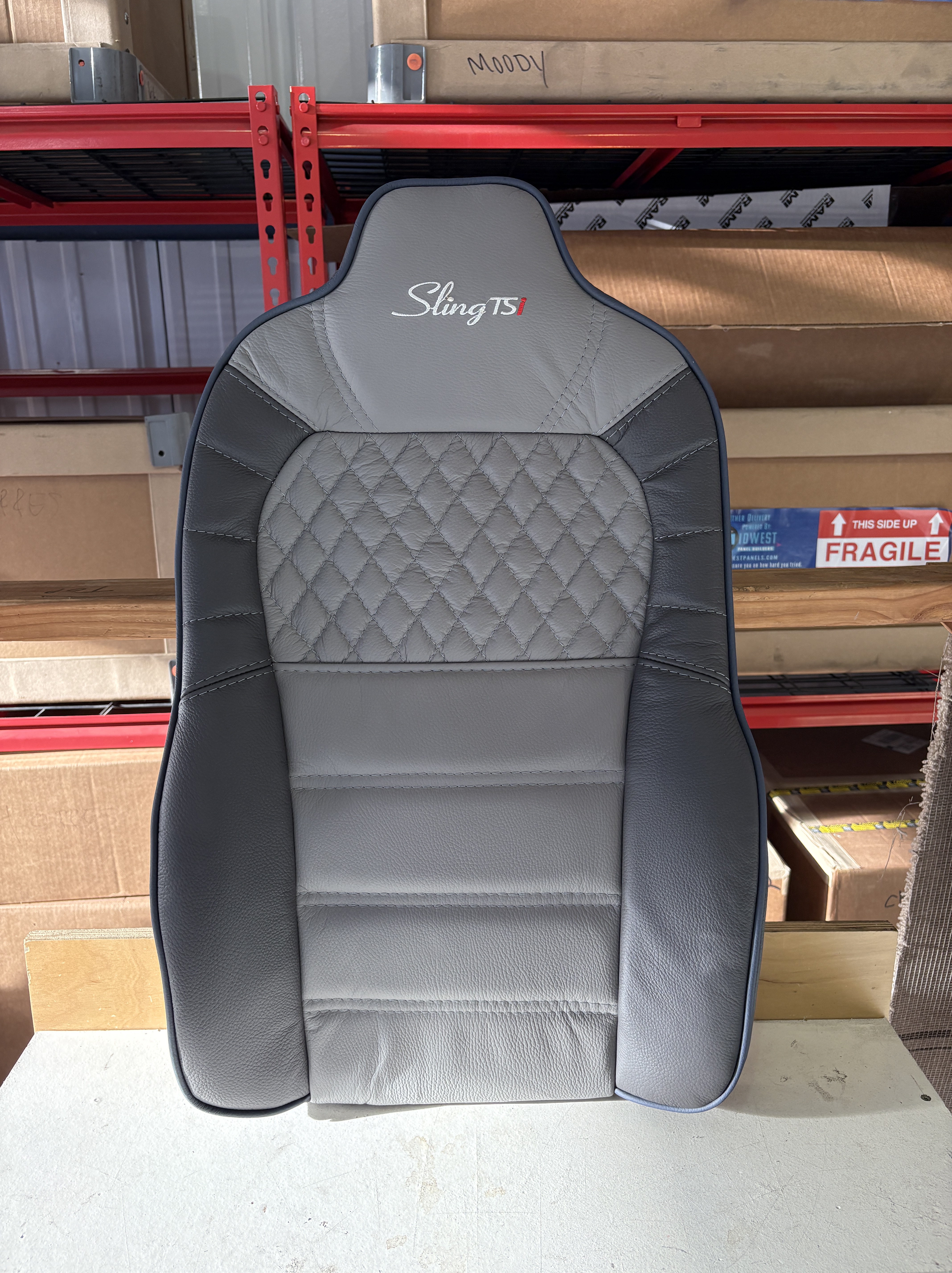
The seat upholstery was also in place. Grey with blue stitching — subtle, cohesive with the exterior scheme, and restrained in the same spirit as the paint design. Nothing loud. Just intentional choices coming together.
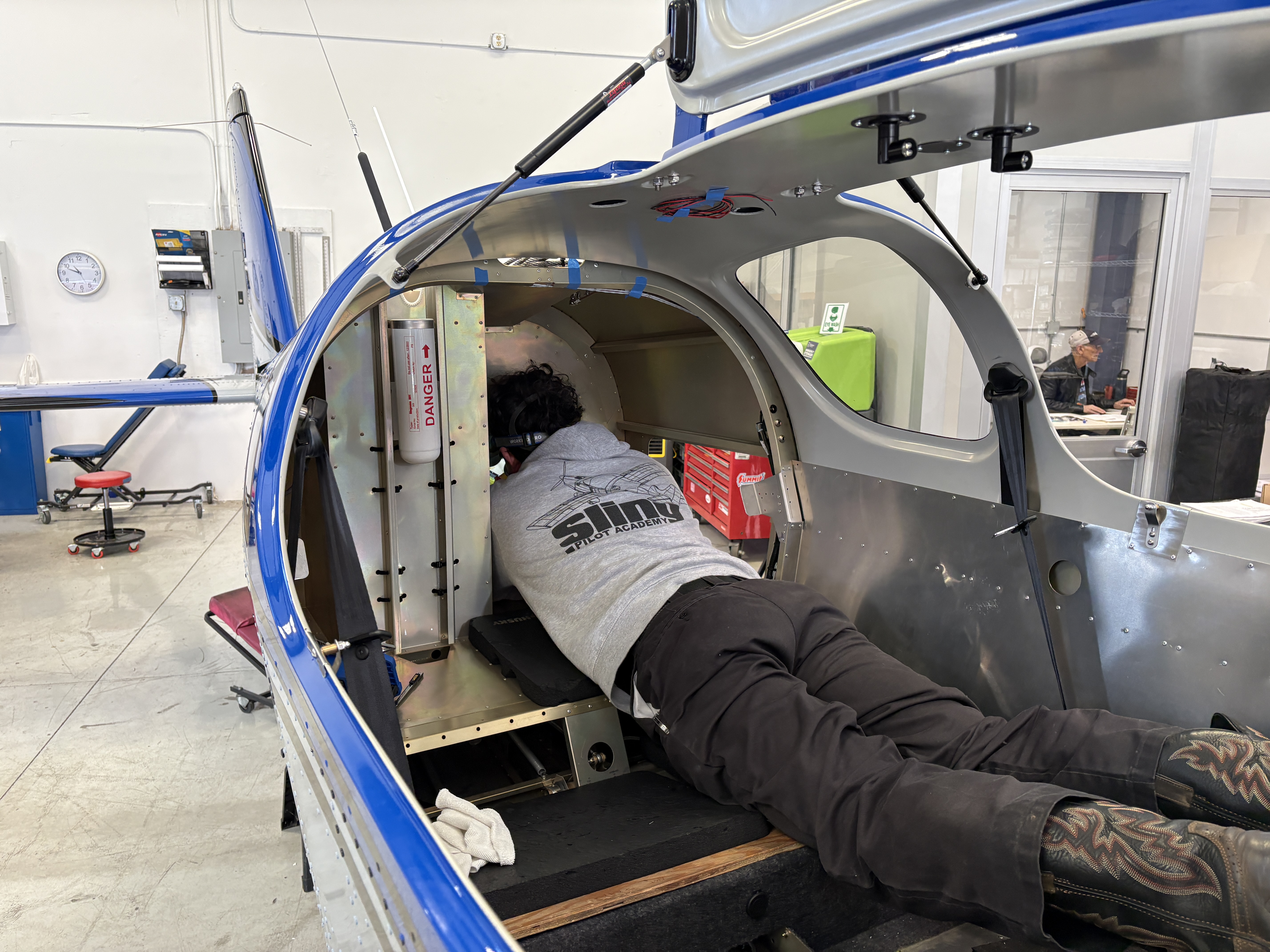
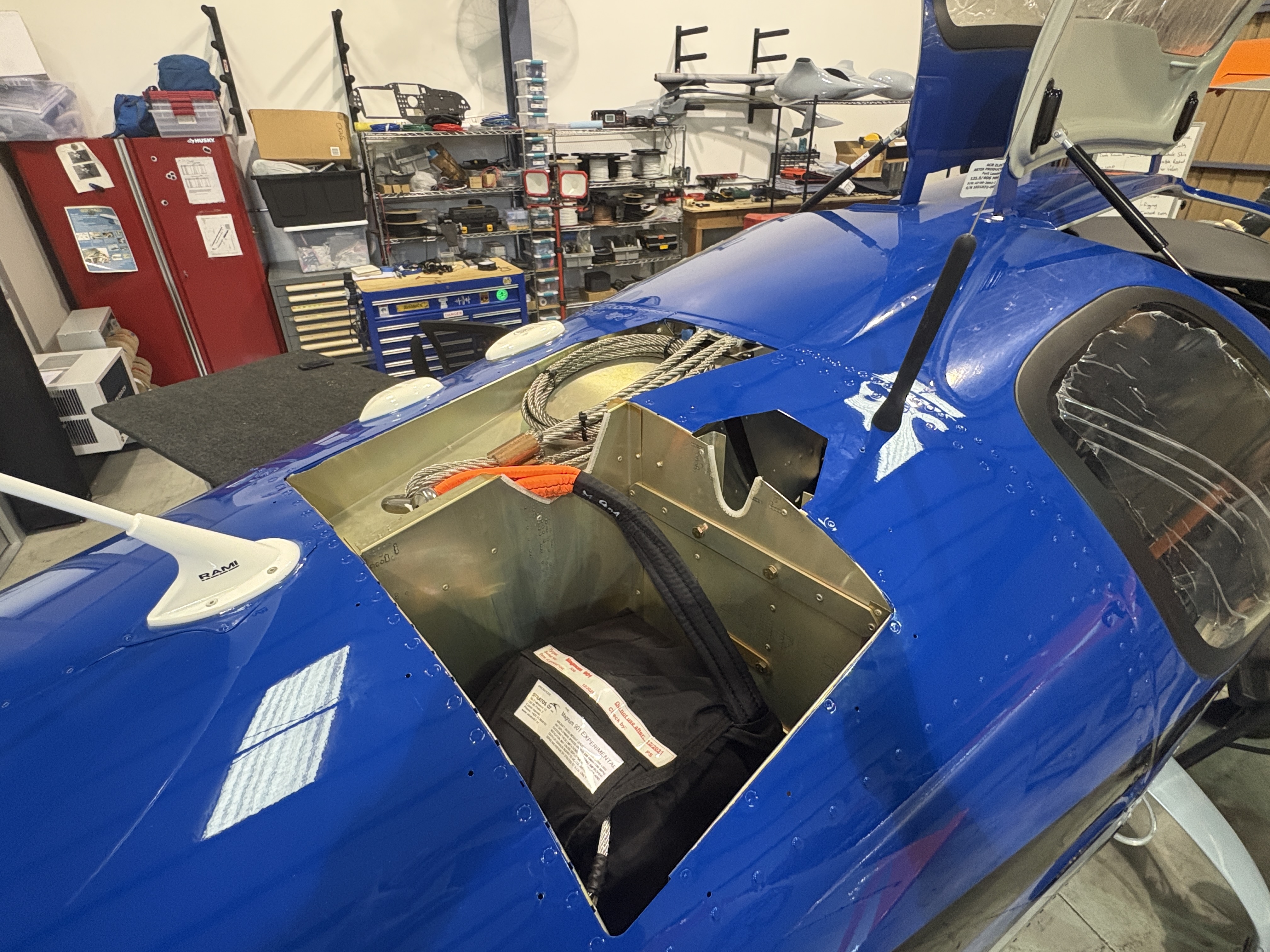
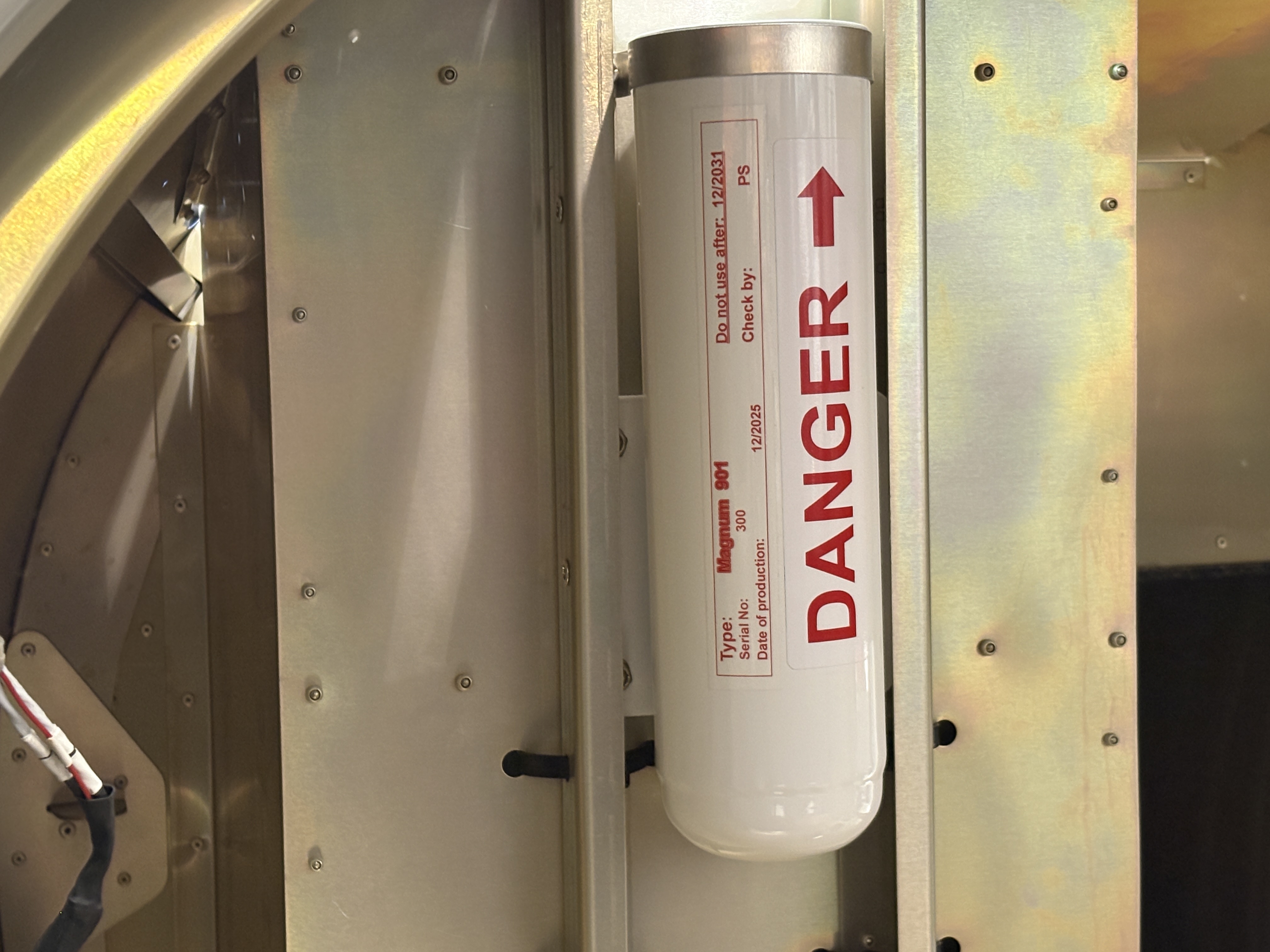
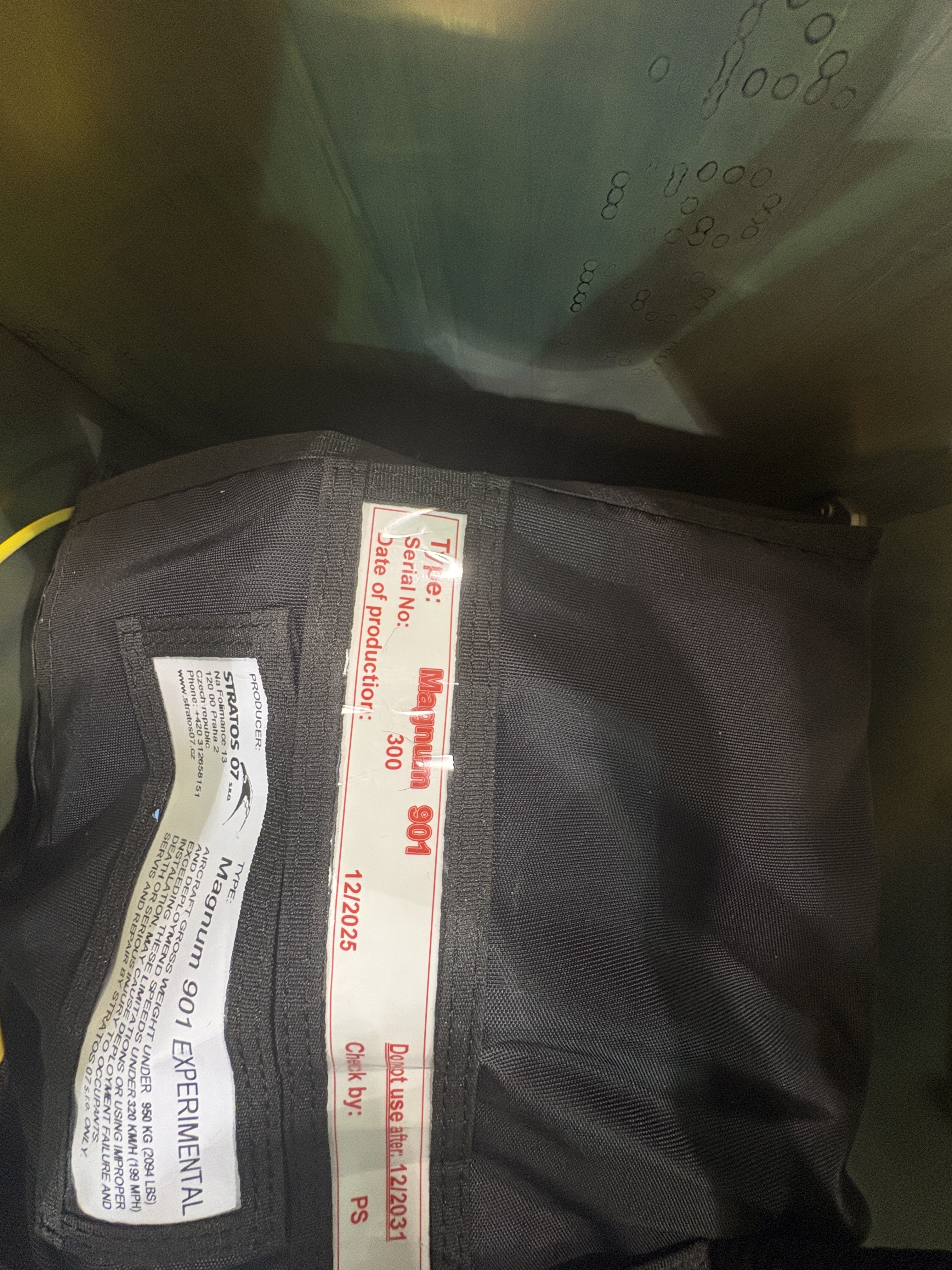
The parachute system — the Stratus Magnum 901 — is installed in the hatch area. As discussed in my earlier post about the decision to include it, the rocket and final fuselage skin installation occur toward the end for safety reasons. It’s one of those systems you hope never to think about again, but knowing it’s there changes your risk calculus in meaningful ways.
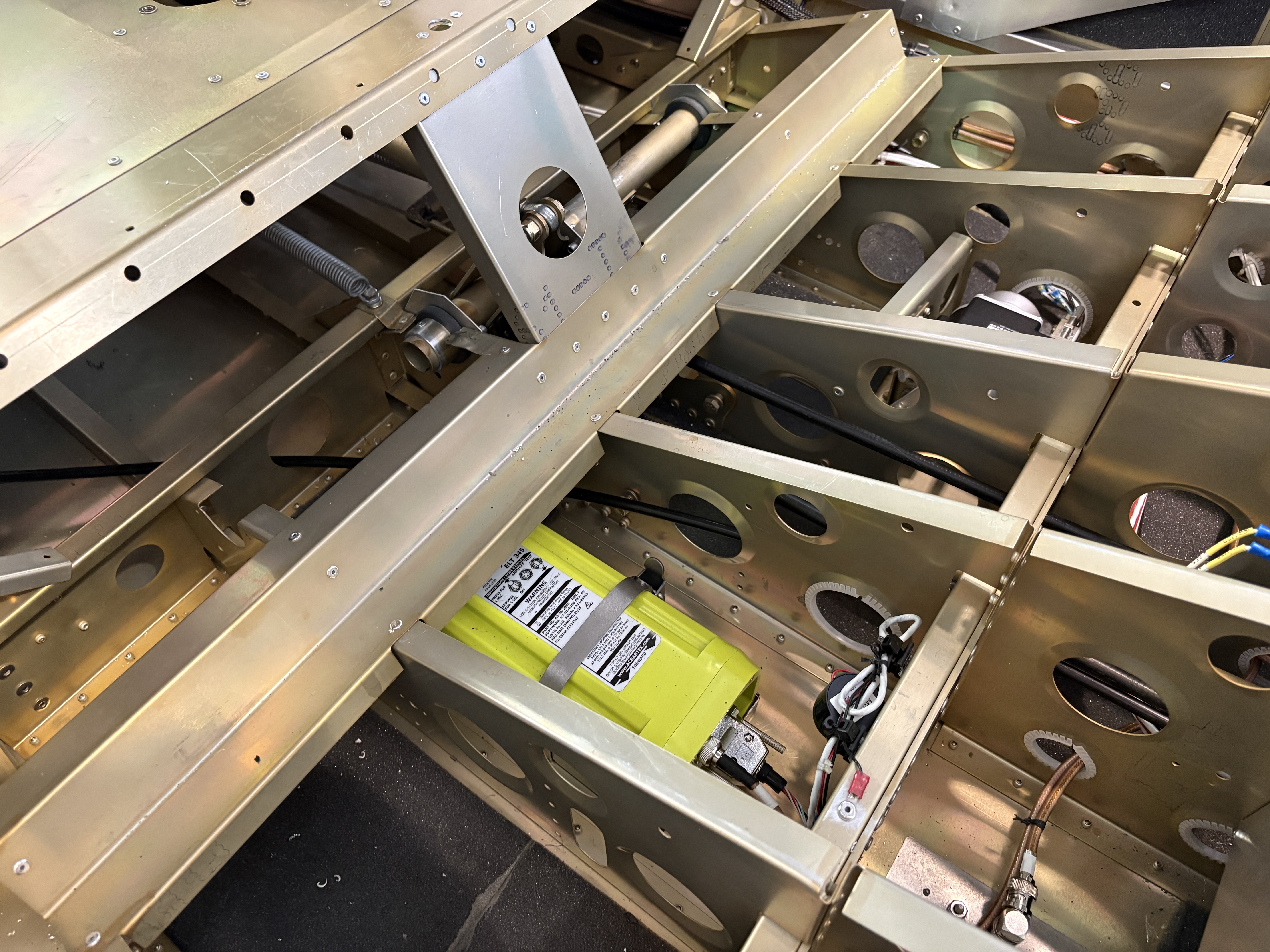
Other systems quietly found their homes as well. The ELT is installed and wired. Autopilot servos are mounted and connected.
What’s Next: The Sound I’ll Miss
The team expects to wrap up their remaining work by the middle of next week. The pitot-static system will undergo its 91.411 certification, final checks will be completed, and then comes the milestone everyone waits for:
First engine start.
Unfortunately, I won’t be there.
There are immovable commitments that will keep me away, and while I can rationalize it — I’ve been present for so many other milestones — there’s no denying I would have liked to hear that first ignition in person. The first time fuel flows, the prop turns under its own power, and months of wiring, plumbing, and torque specs resolve into sound.
But builds aren’t about a single moment. They’re about the arc.
After engine start and system verification, the wings will come off again for transport. The airplane will move to French Valley Airport (F70) for the DAR airworthiness inspection and the beginning of Phase 1 flight testing. That’s where the airplane stops being a project entirely and starts proving itself in the air.
Standing in the hangar this week, looking at the painted fuselage, powered avionics, installed propeller, and mounted wings, the shift was undeniable. This is no longer a collection of parts being assembled.
It’s an aircraft preparing to fly.
The next chapter won’t be about rivets or wiring harnesses. It will be about data, test cards, and the first few cautious hours in the logbook.
And that feels very real now.




 Slingology - Building and Flying a Sling TSi
Leave a comment