

When I first decided to build an airplane, I knew I was signing up for a technical challenge—but what I didn’t expect was finding a community that feels like aviation’s beating heart. That community is the Experimental Aircraft Association (EAA), a nonprofit that exists to promote and support recreational aviation. If you’ve ever been to AirVenture in Oshkosh, you’ve seen it in full color: thousands of aircraft, hundreds of thousands of visitors, and one unifying spirit—the idea that ordinary people can do extraordinary things when they share a passion for flight.
I joined EAA Chapter 84 at Harvey Field in Snohomish, Washington, last year, right after committing to build my Sling TSi. I wanted to surround myself with people who had walked this path before—builders, restorers, tinkerers, pilots—and to learn the craft from those who live and breathe it. Within months, I found myself helping the team as Membership Coordinator, managing rosters, renewals, and exploring ways to attract new members.

In a way, it felt like joining a co-op for dreamers. Everyone contributes something: a story, a skill, a rivet gun. The EAA isn’t just about airplanes—it’s about people. It’s a place where knowledge is shared freely, mistakes are just another form of education, and every completed project is a collective victory.
My first real taste of that generosity came during an EAA Metal Sheet Workshop, where seasoned instructors helped us hammer, cut, and rivet bits of aluminum into submission. I left with a small, misshapen piece of metal and a huge respect for the builders who make it look easy. That workshop, more than anything, showed me what the EAA stands for: education, camaraderie, and the belief that aviation should be accessible to anyone with curiosity and a bit of courage.
The Leadership Academy Invitation
Earlier this year, several members of our Chapter 84 board mentioned a program called the EAA Chapter Leadership Academy. It’s a three-day workshop held at EAA headquarters in Oshkosh, Wisconsin—the same grounds that host the annual AirVenture event. The program brings together chapter officers and volunteers from across the country to learn how to strengthen their local organizations, engage members, and make the most of the extensive resources EAA provides.
The idea immediately appealed to me. I had joined the chapter only a year earlier, but serving as Membership Coordinator and participating in the chapter board meetings gave me a front-row seat to the challenges and opportunities of running a volunteer-driven organization. Applying felt like a natural next step—a way to understand how successful chapters operate and to bring back practical ideas that could benefit ours.
A few weeks later, I received an email confirming my acceptance to the October 2025 session. The itinerary promised a full schedule: presentations from EAA staff, breakout discussions, and visits to some of the most inspiring aviation landmarks on the Oshkosh campus. It wasn’t a conference in the traditional sense; it was more of a deep dive into how EAA chapters fit within the larger ecosystem of general aviation.
When I arrived in Oshkosh, I quickly realized that everyone there shared the same motivation—to learn how to make their chapters stronger. Some had decades of experience; others, like me, were relatively new to leadership roles. Despite the differences in background and geography, we all spoke the same language: the language of aviation and community.
Immersed in Oshkosh
The Academy took place at the EAA Aviation Center in Oshkosh, Wisconsin—a location that feels like a pilgrimage site for anyone passionate about aviation. It’s the same campus that transforms each July into AirVenture, the world’s largest fly-in convention.
Our group—chapter leaders from across the U.S.—stayed at the EAA Lodge, a dorm-style accommodation a short walk from the main facilities. Sharing meals and late-evening discussions in the common area was as valuable as the formal sessions. It’s remarkable how quickly camaraderie forms when you’re surrounded by people who also think that “airplane smell” should be bottled and sold.
The program included several off-site visits that highlighted the depth and diversity of the EAA ecosystem.
The Sonex Factory was our first stop, located right on Wittman Field. Sonex has become a fixture in the experimental aircraft world, known for designing efficient, affordable, and performance-oriented kits. Their newest High Wing model was on display, combining classic Sonex simplicity with real touring potential. We also got a look at their single-seat personal jet—a reminder that innovation in homebuilt aviation is alive and well.


Next came the EAA Aviation Museum, an experience that defies simple description. The museum houses more than 200 aircraft, spanning everything from early pioneers to modern experimentals. As someone from Greece, I’ve seen my share of museums, but this one easily ranks among the most engaging I’ve ever visited. I even had the chance to climb into the cockpit of a P-51 Mustang—a bucket-list moment for any pilot.


Finally, we toured the EAA Flight Research Center, where a dedicated team of staff and volunteers maintain and restore the flying collection. Seeing these craftsmen work on aircraft that still take to the skies decades after their original flight was an education in both engineering and preservation.


Each day of the Academy mixed structured learning with spontaneous conversation—often the most valuable part. Whether over breakfast at the Lodge or during a walk across the flightline, ideas flowed easily. We traded chapter success stories, swapped fundraising tips, and compared hangar-building woes. It was a reminder that while airplanes might bring people to EAA, it’s the people who make them stay.
And of course, being in Oshkosh adds its own kind of magic. For anyone who loves aviation, Wittman Regional Airport is nothing short of Disneyland for pilots. Everywhere you look, there’s something that makes you pause—the classic warbirds, the prototype experimentals, the sense that flying here isn’t just transportation, it’s art. Spending three days surrounded by that energy was an experience that felt both grounding and inspiring—a reminder of why so many of us fell in love with flight in the first place.
Key Lessons from the Academy
The formal sessions covered a wide range of topics, each designed to give chapter leaders a better understanding of how to grow, sustain, and protect their organizations. What stood out wasn’t just the amount of information, but how practical and applicable it all was. The Academy didn’t feel like a theoretical management course—it felt like a toolbox you could bring straight back to your home airport.
One of the first sessions reviewed the success of AirVenture 2025, which set new records. Building on that momentum, EAA leadership outlined their vision for AirVenture 2026, which will celebrate 250 years of the United States, the 100th anniversary of the Ford Trimotor, and new exhibits highlighting vertical lift aircraft, space technology, and MOSAIC implementation. The underlying theme was clear: AirVenture continues to evolve not just as an airshow, but as the world’s largest hands-on classroom for aviation.

A recurring theme throughout the sessions was growth—both for EAA and for general aviation as a whole. The Government Relations team discussed Sport Pilot 2.0, the next evolution in accessible flying under the new MOSAIC rules. The changes are substantial: four-seat aircraft, constant-speed props, even night privileges under certain conditions—all while maintaining the simplicity that made the Sport Pilot certificate attractive in the first place. The clear message was that flight schools and chapters have a major role to play in welcoming new pilots into this expanded world.
That focus on the future continued with the Young Eagles Mission 2.5, EAA’s ambitious goal to reach 2.5 million youth flown by AirVenture 2026. Since its inception in 1992, the Young Eagles program has introduced more than two million kids to aviation through free introductory flights—an achievement few organizations in any field can match. The Academy sessions emphasized that the next phase isn’t just about hitting a number; it’s about deepening engagement through programs like AeroEducate, Build and Fly, and Workshops that keep young people connected long after their first flight.


Beyond national initiatives, much of the discussion focused on what makes a chapter successful. The consensus was remarkably consistent across presenters and participants, and could be distilled into a handful of guiding principles:
Hallmarks of a Successful EAA Chapter
- Strong Leadership:
Treat the chapter like a small business—plan ahead, delegate, and manage resources effectively. Leadership succession matters; identify and mentor future officers early. - Quality Gatherings:
Make monthly gatherings the highlight of the chapter calendar. Keep business for board meetings and focus on aviation, education, and social connection. The more engaging and welcoming the environment, the stronger the retention. - Activity and Momentum:
Stay active—host Young Eagles rallies, fly-outs, pancake breakfasts, or even casual hangar coffee meetups. Momentum is contagious; doing something regularly is better than waiting for the “perfect” event. - Growth Mindset:
Every visitor is a potential member. Be welcoming, approachable, and curious. Follow up after someone joins, issue a nametag, and invite them to get involved right away. - Marketing and Outreach:
Make your chapter visible. Use signage, social media, and community events to tell your story. Keep your website up to date and treat every public activity as a recruitment opportunity. - Engaged Volunteers:
Recognize that people contribute at different levels—some lead, some show up occasionally, and that’s okay. A personal thank-you, acknowledgment in a newsletter, or shared meal goes a long way.
These ideas tied naturally into other Academy themes like fundraising, nonprofit management, and risk awareness. The underlying message was clear: EAA chapters thrive when they are active, welcoming, and well-organized. The airplanes may bring people through the door, but what keeps them coming back are the friendships, the shared projects, and the sense of belonging that comes from doing something meaningful together.
A Love Letter to EAA and a Dream Ahead
Spending three days at Oshkosh gave me a new appreciation for how the EAA operates—not just as an aviation organization, but as a community engine that connects people through shared purpose. The structure is impressive, but what truly stands out is the spirit: a combination of curiosity, generosity, and a quiet determination to keep aviation thriving for the next generation. Every program, from youth education to chapter development, exists to make flying more accessible and more meaningful.

That sense of purpose is what makes EAA special. It’s an organization that trusts its members to shape their own chapters while offering the guidance and tools needed to succeed. It celebrates innovation but also honors tradition, and it never loses sight of what brought us all here—the simple joy of flight.
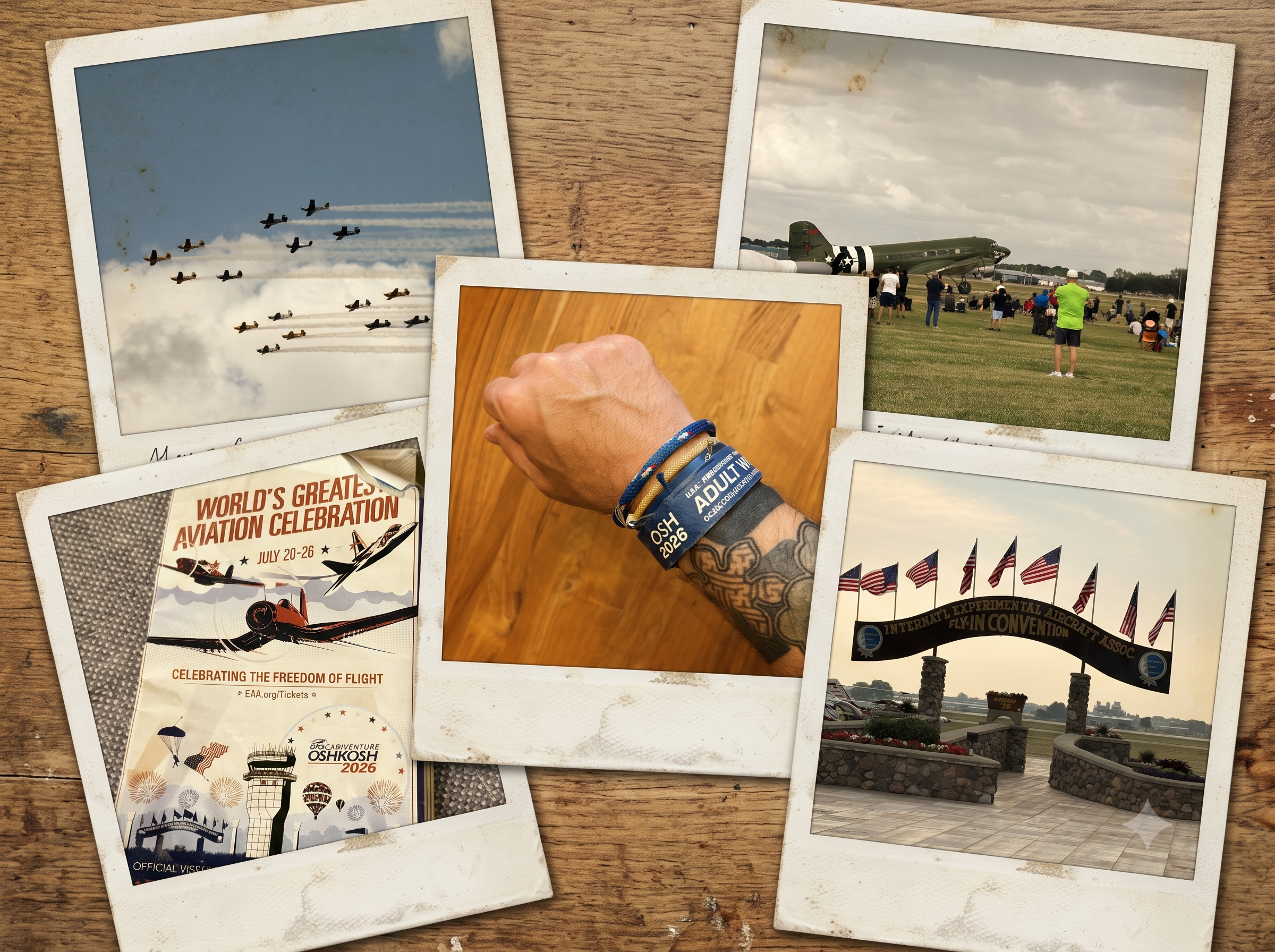
As the Academy wrapped up, I couldn’t help thinking ahead to AirVenture 2026. If all goes to plan, I’ll be flying my Sling TSi to Oshkosh surrounded by friends I met through EAA. It’s a dream that once felt distant, even improbable, but one that now seems entirely within reach.




Leave a Reply