
There are first flights, and then there is your first flight.
Aviation has no shortage of milestone moments — first solo, first cross-country, first IFR approach in actual IMC. Each one gets logged, photographed, and retold at every hangar gathering for years. But this one is different. This one belongs to me in a way I could not have explained to anyone who knew me forty years ago — least of all to the kid growing up in Greece for whom the idea of piloting an airplane was not a dream deferred. It simply did not exist as a possibility. Pilots were other people. Airplanes were things that crossed the sky above you, not things you flew.
That kid could not have imagined any of what came next. A career that brought him to the United States. A retirement that arrived with an unexpected question: now what? And an answer that turned out to involve engineering manuals, avionics deep-dives, a factory in Torrance, California, and somewhere along the way, a pilot certificate.
Building and flying the Sling TSi was never just about owning an airplane. It was about learning — the engineering, the systems, the market, the community. It was about earning something. About discovering that new experiences don’t stop arriving if you keep showing up for them. New places. New friends. New communities. New versions of yourself you didn’t know were still out there waiting.
N117ZS — Roci — lifted off for her first flight on March 20th, 2026.
The adventure had officially begun. And as it turned out, it wasted absolutely no time getting interesting.
Before the First Flight
Before I could fly Roci, someone else had to fly her first.
That someone was The Airplane Factory’s test pilot, and the process is called Phase 1 — a requirement for all experimental aircraft before the owner gets anywhere near the left seat. For a homebuilt, Phase 1 is often a nail-biting, hold-your-breath affair. The flight characteristics are unknown, the build quality is the work of one person in a garage, and every squawk is a surprise. For a factory-built Sling TSi, it is a considerably more civilized process. The Airplane Factory has built hundreds of these airplanes. They know exactly what a TSi should feel like, exactly what to look for, and exactly what good looks like. Their test pilots have flown this make and model more times than most pilots have flown anything.
The Airplane Factory Phase 1 includes a testing the airplane through a checklist of tasks and flying it to 25 hours minimum. The factory works through a standard test matrix — handling qualities, systems checks, squawk identification and resolution — and somewhere in there, a 25-hour oil change that for ROTAX engines is not just routine maintenance but a one-time event that also includes a complete engine inspection. Professional, thorough, and entirely without me.
That last part was the hard part.
The factory had already moved Roci to French Valley and obtained the airworthiness certificate from the DAR by the time I was paying attention. Since I had no visibility into the schedule, I did the only reasonable thing available to me: I subscribed to FlightAware alerts for N117ZS and waited for my phone to tell me my own airplane had flown. The first notification arrived March 20th at 11:30am — a 1 hour 10 minute flight. Over the following weeks there would be many more, including a 5-hour test flight at French Valley, a return flight to Torrance, and a cross-country to Chico and back. All without me. All logged dutifully by FlightAware, delivered to my phone like dispatches from a party I wasn’t invited to.

I asked to be included in the early Phase 1 flights. The answer was a polite but firm no — the airplane was still under factory insurance, and their liability calculus did not include curious owners in the right seat. What they did agree to was three days of formal training at Torrance: the standard five hours, plus whatever additional time I needed, with an instructor who knew the airplane. Given that I had already completed eight hours in their own TSi trainer, I wasn’t starting from zero. The plan was to use those three days to get truly comfortable with my airplane, validate the systems, and build toward a ferry flight north to Arlington.
First, though, I had to get there.
Monday — The First Flight
Monday started on the ground, which was exactly right.
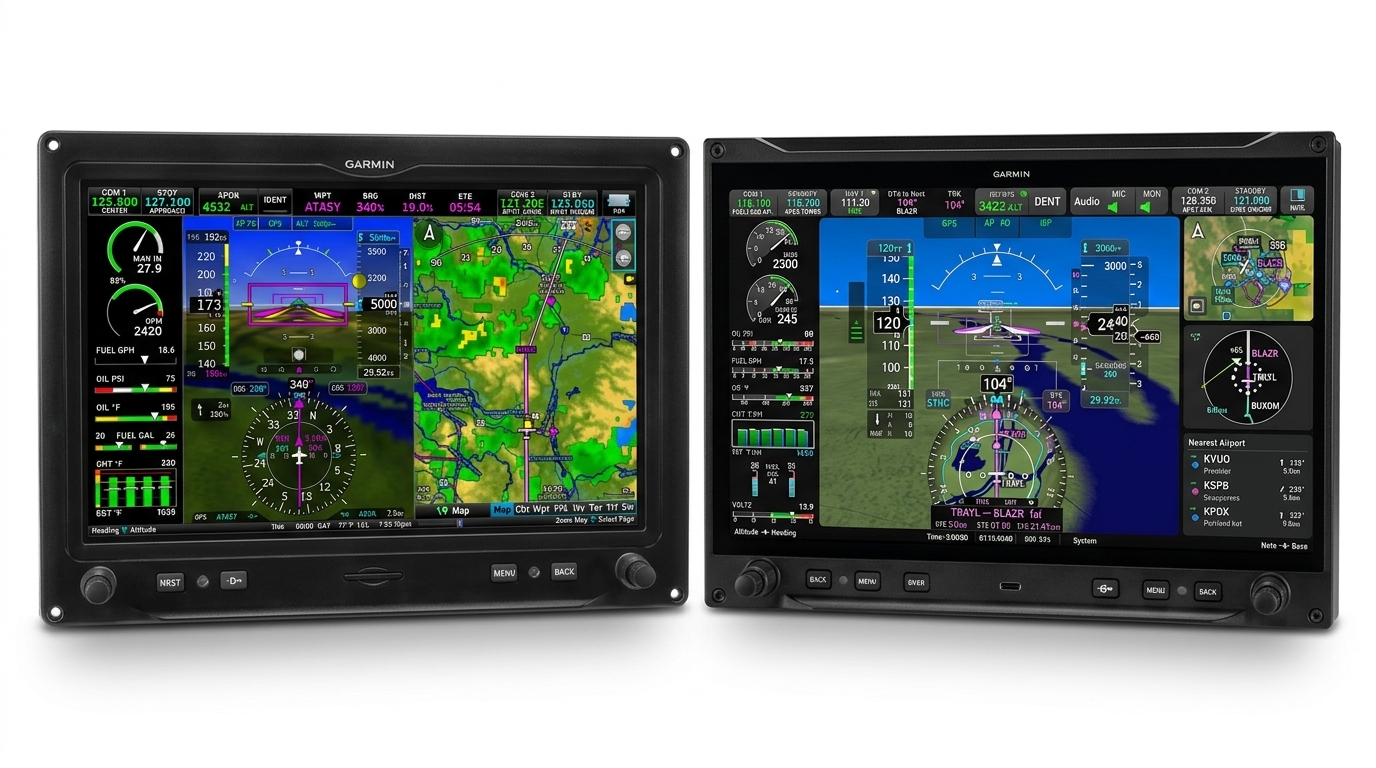
Before any flying happened, I spent hours in the cockpit connected to a battery charger, working through my avionics checklist. The G3X, the GTN 650Xi, the VP-X power management system, the GDL 51R — each one methodically checked, configured, and verified. I got through roughly 80% of my planned ground items, including subscribing to and installing the latest Garmin databases. I talked with the mechanics. The squawk list was reassuringly short — a few minor paint touch-ups and one more substantive item: a slight right rudder tendency during straight-and-level flight. The team had already checked the rudder alignment and cable tension. It was noted, it was being worked, and it was not going to stop us from flying.

My instructor for the week had the kind of calm competence that makes you feel like everything is going to be fine even before you’ve done anything. We briefed the plan for the day — maneuvers, emergency procedures, pattern work — and went flying.


The moment Roci lifted off the runway at Torrance, something clicked into place that is genuinely difficult to put into words. She felt like home. Not the cautious, unfamiliar home of a rental airplane you’re still figuring out, but the comfortable, settled home of something that already knows you. The controls were responsive and well-harmonized. The power was immediate and authoritative. The Garmin avionics stack — all those hours of ground study, all those blog posts, all those configuration sessions — suddenly made complete sense in the context of actual flight.

We did everything on the list. Stalls, steep turns, slow flight, emergency descent, simulated emergency procedures. Roci handled all of it without complaint — fast, responsive, and remarkably composed. The height advisor on the G3X earned its reputation on the very first approach, providing exactly the kind of smooth, confidence-building guidance that makes you wonder how you ever landed without it. We ran through a number of circuits at Torrance, each one a little more settled than the last.
The slight right rudder tendency was still there. But everything else? Everything else was a dream.
I climbed out of the cockpit at the end of Day 1 with the particular kind of tiredness that only comes from doing something you love very hard for several hours. Roci had delivered on every expectation. The adventure, as promised, had begun.
Tuesday Morning — Brandon and the Rudder Fix
Tuesday morning began with a diagnosis.
The right rudder tendency from Monday hadn’t gone away on its own overnight — a fact that will surprise exactly nobody — so the factory team went to work. After some careful inspection, they identified the culprit: the front wheel pants were ever so slightly askew to the left, enough to introduce a subtle but persistent aerodynamic bias in cruise flight. A small adjustment, but the kind of small adjustment that requires someone who knows what they’re looking at. They made the correction and called it ready to test.
Which is how I ended up flying with Brandon.
Brandon is the factory’s test pilot — the same person who had been putting Roci through her paces during Phase 1 while I was home refreshing FlightAware. Flying with him for even a short flight was one of those unexpected bonuses that you don’t put on a checklist but end up being one of the highlights of the trip. We climbed out of Torrance and box-climbed over the airport, working through a series of maneuvers while Brandon offered the kind of quiet, specific, hard-earned tips that only come from someone who has flown this exact airplane more times than they can count. The kind of knowledge that doesn’t live in any POH.
The rudder tendency had improved. Not completely resolved — it needed a touch more adjustment — but meaningfully better. Good enough to fly. Good enough for what came next.
We landed, debriefed, and the afternoon opened up. My instructor and I had a cross-country planned.
Santa Monica and then San Diego.
Tuesday Afternoon — The Door
The flight to Santa Monica started beautifully.
Good weather, busy airspace, Roci performing exactly as advertised. My instructor in the right seat, me in the left, working through the kind of relaxed cross-country flow that makes you feel like you’re finally getting the hang of this whole airplane ownership thing. The plan for the afternoon was ambitious in the best way — fly the LAX Special Rules transition route southbound, land at Santa Monica, then continue south toward the San Diego area, using the full cross-country leg to put the autopilot, GTN navigation, and systems integration through their paces in real conditions. Not a training flight. A real trip, in a real airplane, doing real things.

Los Angeles Basin spread out below us, the Pacific glinting somewhere off to the west. Second flight in my brand new airplane. Life was good.
Then, descending through 2,000 feet to join left base for runway 21 at Santa Monica, the co-pilot door decided it had other plans.
It didn’t crack open. It didn’t unlatch and rattle. It opened — fully, instantly, and with complete commitment — like it had somewhere better to be. At cruise descent speed, the airstream caught it immediately and the hinge bent and partially ripped at the back of the door. In about half a second, my brand new Sling TSi had gone from a sleek, sealed flying machine to something with significantly more ventilation than the designer intended.
My instructor, sitting in the right seat, received the full sensory experience of 100-plus knot air in his face without any warning whatsoever. He was, to put it diplomatically, not thrilled.
Roci, on the other hand, was completely unbothered.
This is the part of the story I want other Sling TSi pilots to hear clearly: the airplane did not flinch. No dramatic aerodynamic upset, no scary control moment, no sudden departure from stable flight. The door was fully open, the hinge was bent, and she just kept flying. Whatever your mental model of “door open in flight” looks like, dial back the drama considerably. The TSi is not fazed.
I had read enough door-open incident reports to know that the number one job in that moment is to fly the airplane and not panic. Turns out that’s easier said than done — unless the door happens to open on the other side of the cockpit, in which case your instinct to grab the controls and focus is considerably less complicated than your instructor’s instinct to process what just happened six inches from their face. He handled the radio. I handled the airplane. It was not an explicitly coordinated division of labor but it worked out perfectly.
We called Santa Monica tower and requested priority handling. The airport was busy — it’s Santa Monica, it’s always busy — and we had been holding over the Getty Center waiting for sequencing. When we explained the situation, tower did exactly what you hope tower does: cleared the other traffic, sequenced us right base, and gave us the runway. Professional, efficient, no drama from their end either.
I flew the full approach and landing myself.
Here is where it gets technically interesting. With the door open, cabin pressure changed — and I had a nagging sense that something felt off with the airspeed. I was at zero power, expecting to slow down, and the deceleration felt wrong. The AOA indicator, however, was telling a consistent story. I made the decision to trust the AOA over the IAS, gave myself the luxury of a long, stabilized approach, and used the full runway to my advantage. We rolled out cleanly.
Post-flight log analysis from FlySto told an interesting coda to that part of the story: the IAS and groundspeed matched well throughout the approach. There had been a 10 to 15 knot headwind that explained the deceleration feel. The airspeed was probably fine all along. But here’s the thing — in that moment, with an open door and an unfamiliar airplane, I didn’t know that. And the right answer when something feels off is exactly what I did: identify your most reliable instrument, fly conservatively, and give yourself margin. The AOA was right. The decision was right. The outcome confirmed both.


The debrief afterward had a certain texture to it. The most likely explanation for why the door opened sat quietly in the room with everyone and nobody addressed it directly. What I can say is that the factory’s response was immediate and professional — mechanics were at Santa Monica the same day, assessed the damage as hinge-only, and had a repair plan in motion before the day was out. The door itself was completely unaffected, which turns out to be a feature of the new door design on the latest TSi aircraft: the hinge is fully replaceable without touching the door, designed to absorb and sacrifice itself in exactly this kind of scenario. In a strange way, the system worked as intended.
A few things worth taking away from all of this — not just for Sling pilots, but for anyone flying an aircraft with a door that opens upward and outward:
Check the door latch. Then check it again. Make it a deliberate, explicit step in your flow every single time. Not a glance — a check. The door held through taxi and takeoff and let go in the descent. Don’t find out the hard way that an almost-latched door and a fully-latched door are not the same thing.
The TSi will fly with the door open. Not comfortably but it will fly just fine. Know this before it happens so that when it happens — if it happens — your first reaction is to fly the airplane, not to fixate on the door.
Trust your instruments hierarchy. AOA over IAS when something feels wrong. Margin over precision when you’re task-saturated. Long runway over short runway when you have the choice. These are not revolutionary ideas. They are very easy to forget in the moment.
Roci’s first cross-country. Quite a debut.
What’s Next
Roci is currently back at the factory.
The door hinge has been removed, the repair is underway, and the paint touch-ups are in progress. The plan is to ferry the airplane north to Arlington, Washington the week of April 20th — a flight I have been mentally planning since long before the airplane existed in any form I could actually touch.
The ferry flight itself deserves its own post, and it will get one. It is not a short trip. Flying a brand new experimental aircraft from the Los Angeles Basin up the coast and into the Pacific Northwest for the first time — that is the kind of flight you prepare for carefully and remember forever. There will be weather to consider, airspace to navigate, fuel stops to plan, and somewhere over Northern California, a moment where the whole journey from that kid in Greece to this specific airplane at this specific altitude will probably hit harder than expected.
But that is next week’s story.
What this week gave me is something I did not fully anticipate: confidence. Not the fragile confidence of someone who got lucky, but the earned confidence of someone who flew a new airplane through a genuine emergency, made good decisions under pressure, and landed cleanly. Roci handled everything I asked of her and then some. The Garmin avionics stack performed. The systems held. The airplane flew with a door open at 2,000 feet over Los Angeles and didn’t even blink.
There is a Greek word — filotimo — that roughly translates to a love of honor, a sense of duty to do the right thing even when no one is watching. It doesn’t translate perfectly into English because the concept is bigger than any single word can hold. But it is the word that comes to mind when I think about what flying asks of you. Not heroics. Not bravado. Just the quiet commitment to do the right thing, in the right order, when it matters.
Fly the airplane. Trust your instruments. Check the door.
The adventure is just getting started.


Leave a Reply